
En esta noticia
The kitchen and bathroom drains can accumulate residue that makes it difficult for water to flow and generates bad odors. Faced with this problem, there are homemade alternatives that allow for regular cleaning with common household ingredients. One of them combines white vinegar, baking soda and boiling water.
The Metro Healthy Cleaning Guide, a public agency in Portland, Oregon, recommends this preparation as part of regular drain maintenance and details how to apply it.


How to use white vinegar, baking soda, and boiling water to clean drains
The Metro guide proposes a simple recipe that combines baking soda, distilled white vinegar, and boiling water. The procedure is intended for periodic cleaning and can be repeated if necessary.
To prepare the mixture, the following ingredients are needed:
- ¼ cup of baking soda.
- 1 cup of distilled white vinegar.
- 6 cups of boiling water.
The recommended step-by-step is as follows:
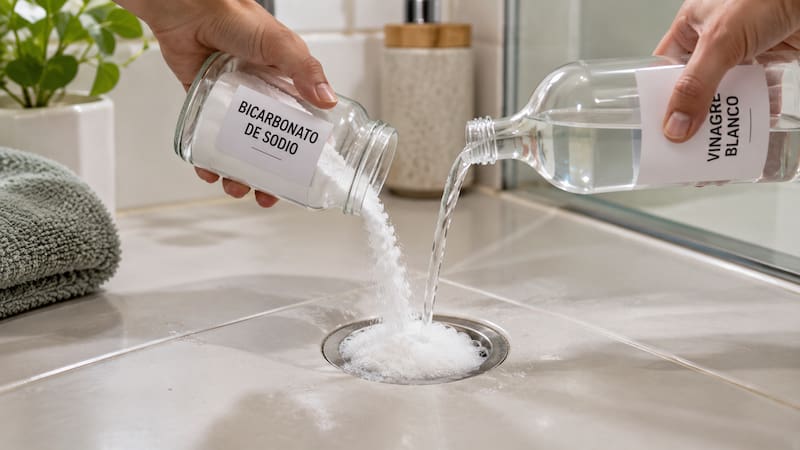
- Place the baking soda directly into the drain.
- Add the distilled white vinegar.
- Cover the drain, if possible, to contain the reaction of the mixture.
- Let it sit for 10 minutes.
- Boil six cups of water and pour them down the drain.
- Repeat the procedure if necessary, until the water flows properly.
Why white vinegar and baking soda are recommended for drains
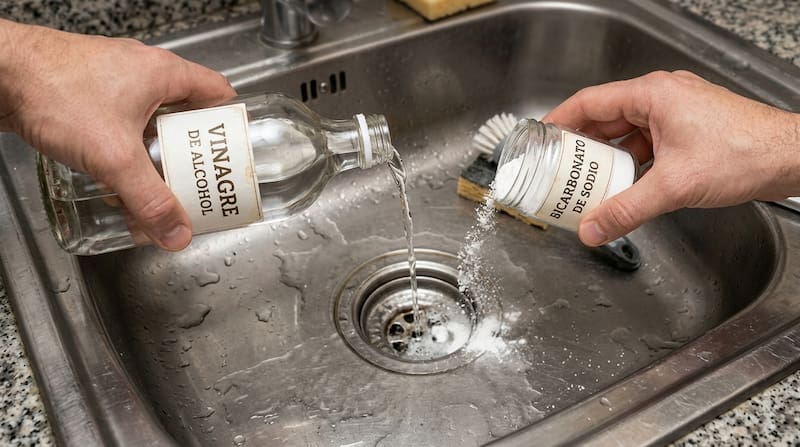
It is recommended to use white vinegar and baking soda in drains because their combination produces an effervescent reaction that can help loosen accumulated surface residue. However, it is not a particularly effective method for unclogging major blockages.
Specifically, baking soda is an alkaline substance that can help loosen some of the grime, while white vinegar contains acetic acid, which reacts with the baking soda and releases carbon dioxide. This reaction generates bubbles that can move some residue stuck to the walls of the drain.
What precautions should be taken when using this mixture?
Although it is used as a homemade method for cleaning drains, it is important to take some precautions. Boiling water can damage certain pipes, seals, and plastic components, so it is advisable to check the resistance of the materials before applying it. If the type of installation is unknown, it is preferable to use hot water, but not boiling water, to reduce the risk of damage.
In addition, this preparation should not be combined with bleach, commercial drain cleaners, or other chemical products, as the mixtures can cause dangerous reactions.
The main recommendation is to carry out regular maintenance and not wait until the water stops flowing completely. If the clog persists after cleaning, the best approach is to identify its cause and use a specific method to unblock the pipe.