
En esta noticia
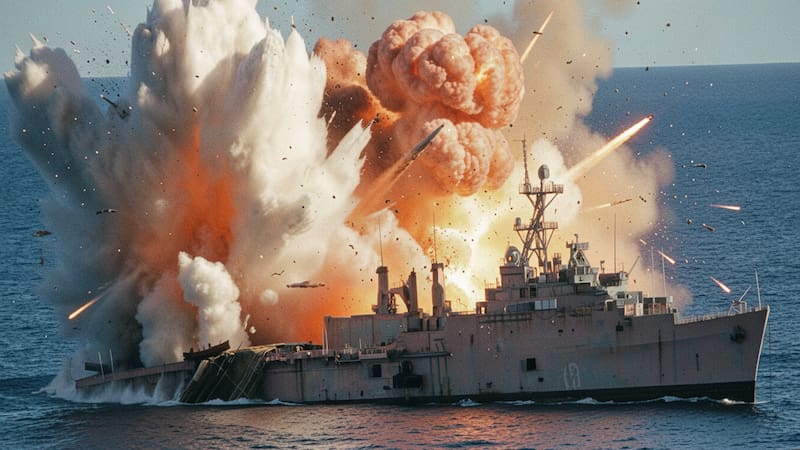
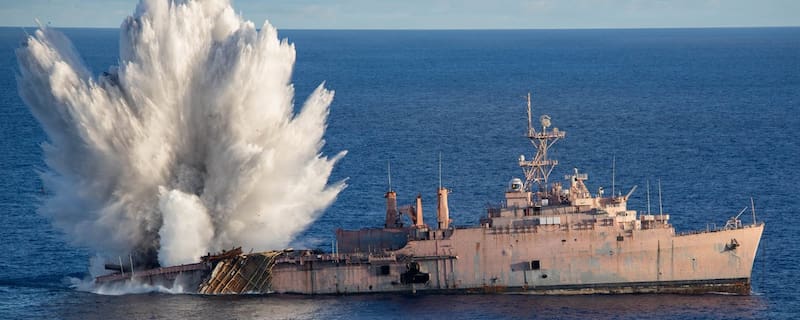
A submarine from the Japan Maritime Self-Defense Force sank the USS Juneau with a torpedo, a decommissioned U.S. warship, during the joint military exercise Valiant Shield in the Pacific Ocean. The maneuver was carried out more than 200 nautical miles from the Mariana Islands.
The sinking was part of a SINKEX, a live-fire exercise that the U.S. Navy conducts on retired ships. Valiant Shield took place between June 22 and July 1 with the participation of multiple nations.

How was the American ship sunk?
Rear Admiral Eric Anduze, commander of Carrier Strike Group 5 and Task Force 70, explained that the exercise made it possible to integrate capabilities among the participating forces and refine the coordination needed for maritime operations in the Pacific.
Valiant Shield is a biennial training exercise that seeks to strengthen the joint ability to detect, locate, track and strike targets at sea, in the air, in space, on land and in cyberspace, according to the Navy.
Countries that participated in the exercise:
- United States
- Japan
- Australia
- Canada
- New Zealand
What significance does this sinking have for the United States and Japan?
The event comes almost 84 years after the first USS Juneau (CL-52) was sunk by a Japanese torpedo during the Guadalcanal campaign, in November 1942. Five Sullivan brothers were killed in that attack, leading the Navy to ban immediate family members from serving on the same ship.
The USS Juneau (LPD-10) entered service in 1969, participated in the Vietnam War and Operation Desert Storm and was decommissioned in 2008. Before the sinking, the Navy removed fuel, contaminating materials and waste from it, according to its usual environmental protocol for this type of exercise.