En esta noticia
Those who travel to other countries frequently know that having a valid passport in good condition is a key step to avoid delays and problems when boarding the plane.
However, not all countries have the same requirements when it comes to allowing foreigners to enter or letting their citizens leave. In some cases, they may require that the passport have a minimum remaining validity or the presentation of additional documents.

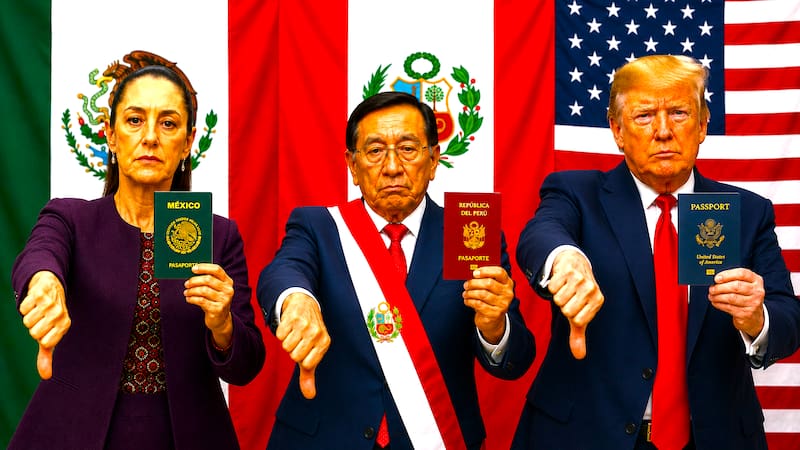
Mexico, Peru, and the United States will block entry to and exit from the country for those who put off this passport procedure
Each of these regions may have exceptions, but the general rule is to present a valid passport. To do so, it is necessary to pay attention to the validity periods and possible delays once the renewal process has begun.
In general, the following requirements are usually demanded:
- Valid passport in good condition
- Valid identity document in countries that allow it
- Match between the details on the ticket and the document
- Immigration permits or visas, when applicable
- Health requirements or forms required by some destinations
Rules for entering or leaving Mexico
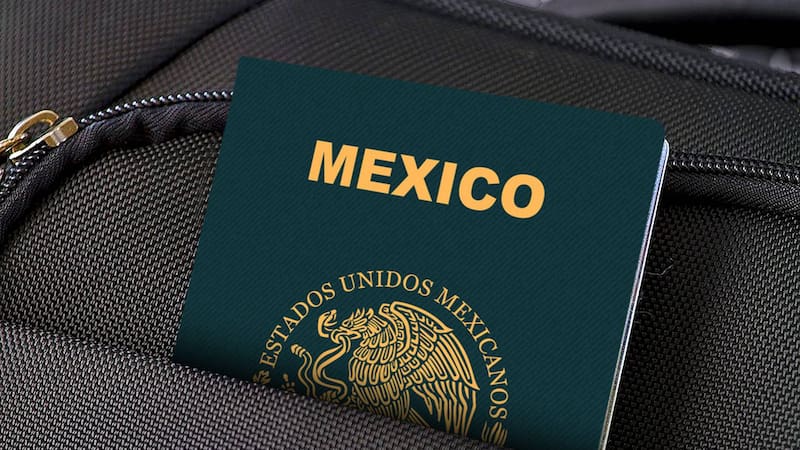
In the case of the Republic of Mexico, all foreigners who wish to enter must present a valid passport. According to the provisions of the National Migration Institute (INM), this document is essential for entry into the country.
Additionally, a departure ticket, accommodation reservations, and proof of financial solvency must be presented together with this document. In some cases, advance visa processing may also be required. A key point is that the passport must have a minimum of six months’ validity remaining from the date of entry.
Mexicans wishing to travel abroad will also have to present a passport that meets these conditions and, if applicable, the visa required by the destination country. In addition, they will be asked to complete the Mexican Statistical Form (FEM).
Rules for entering or leaving Peru
To enter Peru, the conditions change significantly depending on whether the country of origin belongs to MERCOSUR or not. If it does, travelers may enter using only their National Identity Document (DNI), without needing to obtain a visa, according to the National Superintendency of Migration.
Stays of up to 90 days are granted, with exceptions such as Brazil and Chile, whose citizens may remain for up to 180 days.
If, on the other hand, the country of origin does not belong to MERCOSUR, as is the case with the United States, it will be necessary to present:
- A valid passport with a minimum validity of six months from the date of entry and in good condition.
- A round-trip ticket showing the intention to leave the country.
- Proof of financial solvency and a confirmed accommodation reservation.
Peruvians who want to travel abroad must present a valid Electronic Passport, unless the destination country is part of MERCOSUR and allows entry with only an identity document.
Rules for entering or leaving the United States
To enter the United States as a foreigner, you must present a valid passport with a biometric chip along with an approved U.S. visa or an ESTA electronic authorization if the country of origin participates in the Visa Waiver Program. These conditions are supervised by U.S. Customs and Border Protection and the Department of State.
The passport must have at least six months of remaining validity from the date of entry.
If the country of origin does not participate in the aforementioned program, a physical visa will need to be obtained. Among the most common is the B1/B2 tourist visa, which allows temporary stays of up to six months according to the authorization granted by U.S. immigration authorities.

International agreements: Which LATAM countries can enter without a passport?
Thanks to the MERCOSUR Travel Document Agreement and its associated states, citizens of several Latin American countries can cross borders within the region using only their valid national identity document, without needing to present a passport.
Travelers can enter the following countries without a passport:
- Argentina
- Brazil
- Paraguay
- Uruguay
- Bolivia
- Chile
- Colombia
- Ecuador
- Peru
- Venezuela
This means that a citizen of any of these countries can travel to another participating state by presenting only their valid national identity document, as long as the trip takes place within the scope of the agreement and there are no layovers outside the region.