
En esta noticia
An exceptional astronomical phenomenon will take place in 2027 and could transform the sky for several minutes in different regions of the world. The Moon will pass between Earth and the Sun and completely block its light across a band of the planet.
The event is already drawing interest because of its length: at the point of greatest obscuration, the darkness will last more than six minutes. It is one of the longest total solar eclipses of the 21st century, and it will be many decades before another of similar length comes along.

When the 2027 total solar eclipse will happen
The total solar eclipse will occur on August 2, 2027. According to calculations published by NASA, totality will last a maximum of about 6 minutes and 23 seconds.
That period will be recorded at the point where the eclipse lasts the longest, located in a part of northeastern Africa near Egypt. The exact duration will vary depending on where it is viewed from: in some cities, the Sun will be completely covered for less time.
NASA estimates the eclipse will reach its peak around 10:07 UTC. The local time will depend on the country and city where the event is being watched.
Why the 2027 eclipse will be so special
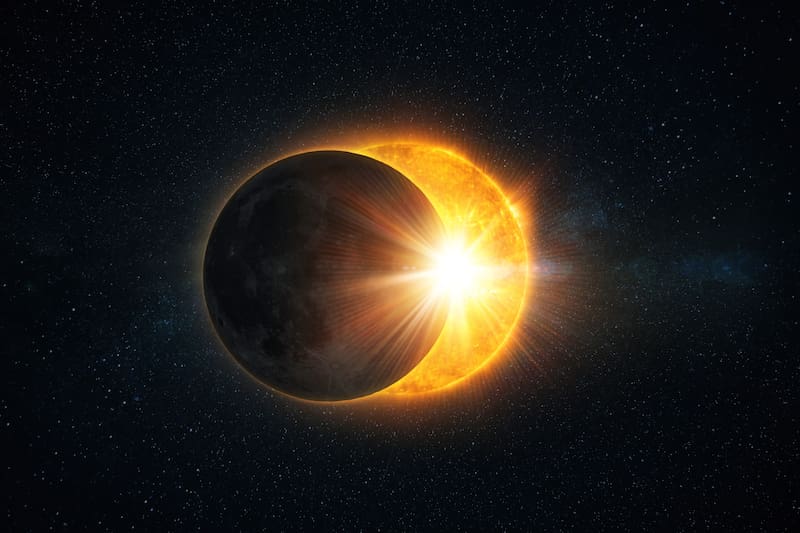
What makes this phenomenon unusual is the length of its total phase. During that brief interval, the Moon will completely cover the Sun’s disk and the sky will darken much like dusk.
According to astronomical calculations, it will be the longest total solar eclipse visible from land since 2009, and there will not be another longer one until 2114.
For that reason, several specialized publications consider it one of the major astronomical events of this century.
The U.S. National Solar Observatory also says totality could last about 6 minutes and 22 seconds near Luxor, Egypt.
Where the August 2027 solar eclipse will be visible
The path of totality will cross southern Europe, northern Africa and part of the Middle East. Areas in its path will include Spain, Morocco, Algeria, Tunisia, Libya, Egypt, Saudi Arabia, Yemen and Somalia.
Some of the cities and regions where the Sun will be completely covered include:
- Spain: Cádiz and Tarifa.
- Morocco: Tangier.
- Algeria: Oran.
- Tunisia: Sfax and the Kerkennah Islands.
- Libya: Benghazi.
- Egypt: Luxor and other towns in the Nile Valley.
- Saudi Arabia: Jeddah and Mecca.
- Yemen: Sana’a.
In Luxor, Egypt, totality will last about 6 minutes and 23 seconds. In other Egyptian locations close to the point of greatest duration, the phenomenon will last more than six minutes.
Outside that band, other parts of Africa, Europe, the Middle East and Asia will be able to see the eclipse partially, with the Moon covering only part of the Sun’s disk.
How a total solar eclipse happens
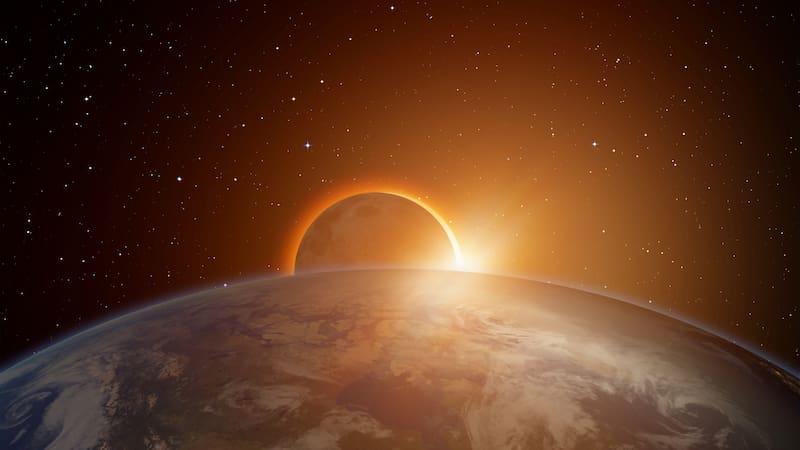
A solar eclipse occurs when the Moon passes between Earth and the Sun and casts its shadow over part of our planet. When the three celestial bodies line up so that the Moon completely covers the Sun’s disk, a total eclipse occurs.
The darkness does not reach the entire planet: only those within the narrow path of totality will be able to see the Sun disappear completely for a few minutes. In nearby areas, the phenomenon will be seen only partially.
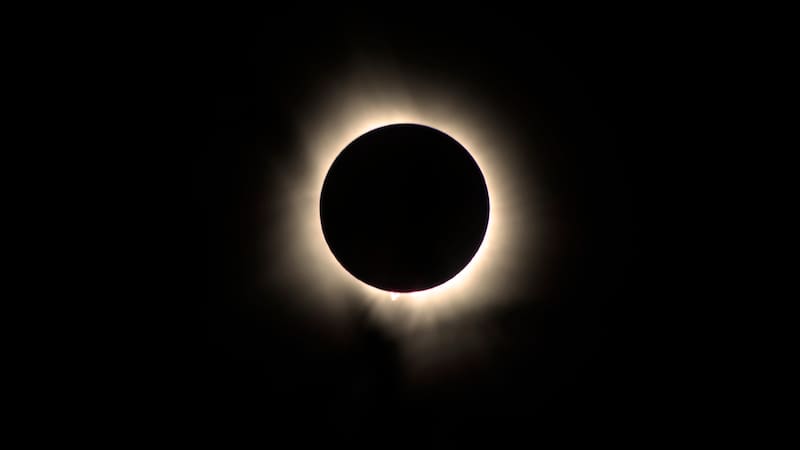
During totality, if weather conditions allow, the solar corona can also be seen, the outermost layer of the Sun’s atmosphere, which appears as a luminous halo around the Moon’s silhouette.
What precautions are needed to watch it
Watching a solar eclipse requires special precautions. During the partial phases, looking directly at the Sun without proper protection can cause serious eye injury.
To follow the event, you need special eclipse glasses that meet the appropriate safety standards. Regular sunglasses, even dark ones, do not provide enough protection.
The only exception is the brief period of totality: anyone within the path where the Sun is completely covered may look without filters only while that phase lasts. Before it ends and any part of the Sun’s disk reappears, they must put the protection back on.