
En esta noticia
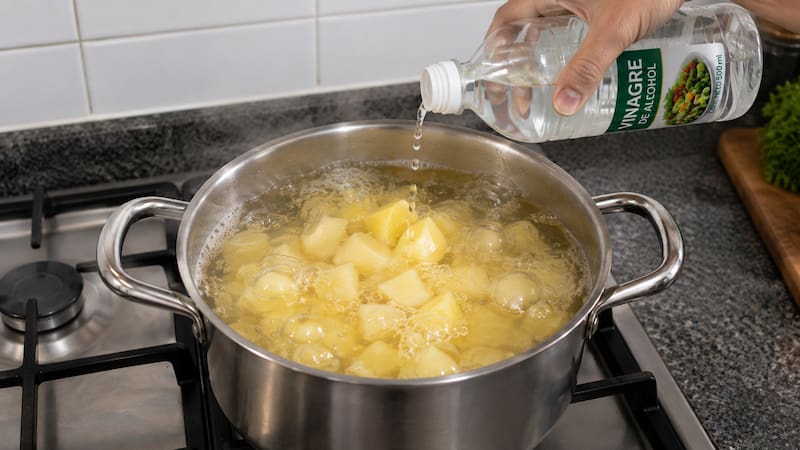
It is a simple kitchen trick that is becoming more common: add a splash of vinegar to the water when boiling potatoes. The recommendation has a specific goal, to keep the potatoes from falling apart and to keep them firm, and behind it is a simple chemical explanation.

Why use vinegar when boiling potatoes
The main purpose is clear: to keep potatoes firm and prevent them from falling apart while boiling. With vinegar, potatoes hold their shape better, do not break apart or turn to mush, and the skin is less likely to burst. In practice, it is a way to end up with whole, firm potatoes instead of soft, crumbling ones.
Vinegar is an acid (acetic acid), and when it is added to water, it makes the water more acidic (lowers its pH). The key is a substance in potatoes called pectin, which acts like a kind of “cement” that holds the plant’s cells together.
When potatoes are cooked in water, that pectin gradually dissolves and the cells separate: that is why potatoes soften and, if cooked too long, fall apart. In an acidic environment, by contrast, pectin breaks down more slowly, so potatoes keep their structure longer.
How to do it correctly
The preparation is simple. How to do it:
- Add about one or two tablespoons of white vinegar for every liter of water to the cooking water (a small amount is enough).
- Add salt as usual.
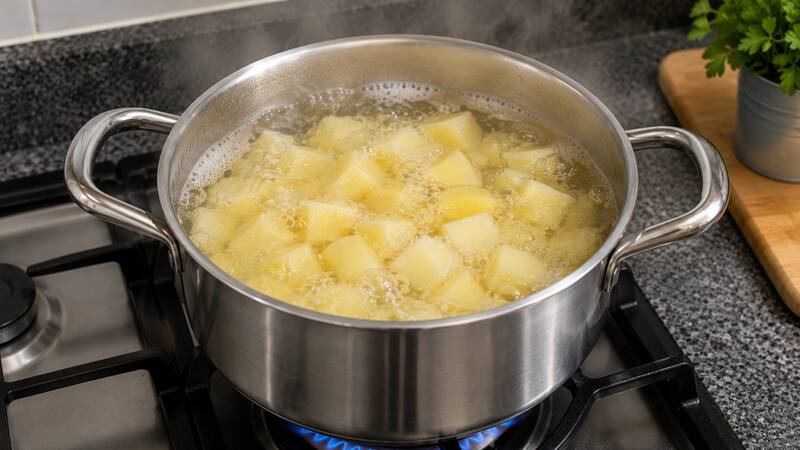
- Boil the potatoes as usual, until they are tender but firm.
- If you do not have vinegar, lemon juice works in a similar way, since it also adds acidity.