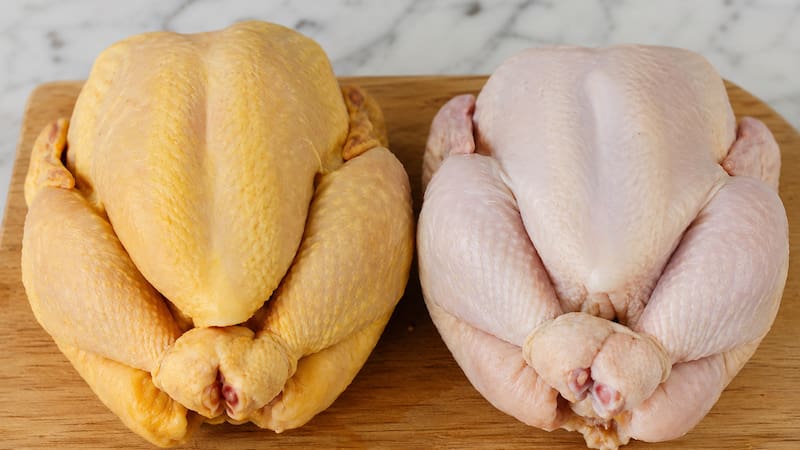

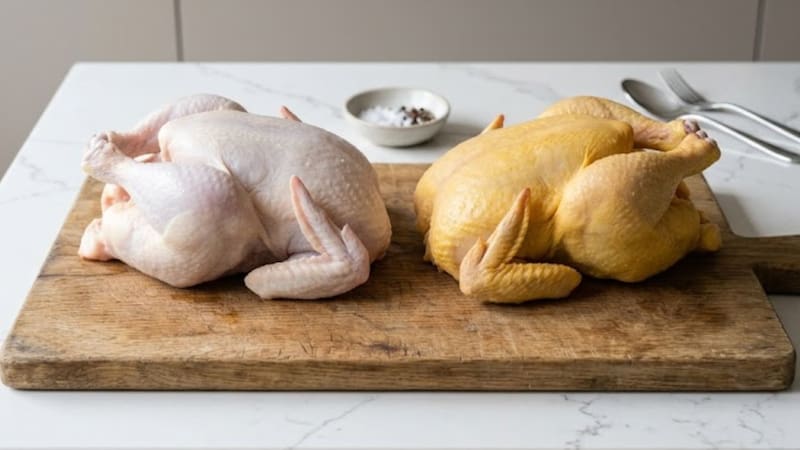
Raw chicken skin can range from bluish white to yellow. According to the Food Safety and Inspection Service of the U.S. Department of Agriculture (USDA), both shades are normal and can vary depending on the bird’s breed, age, activity and diet.
If you’re choosing between a chicken with light skin and one with yellow skin, color alone does not tell you which is fresher. To spot signs of spoilage, the USDA points to other clues, such as a bad smell or a sticky or slimy surface.
Why some chickens have yellow skin
Diet is one factor that can affect skin color. The USDA says marigolds in the bird’s feed can give it a yellowish tint. The animal’s own traits, such as its breed or age, can also play a role.
That variation refers to the skin’s natural color. The USDA guide considers both light and yellow tones normal, so either one can appear in raw chicken.
What to look for when choosing chicken
The USDA explains in its guide to meat and poultry color that fresh product can change color. When chicken spoils, it may darken or lose color and may also smell bad or have a sticky or slimy texture. If it shows those characteristics, the agency recommends discarding it.
When shopping, the U.S. Food and Drug Administration (FDA) also recommends keeping raw chicken separate from fruits and vegetables in the cart and in bags. When storing it in the refrigerator, it advises placing it so its juices cannot drip onto other foods.