
En esta noticia
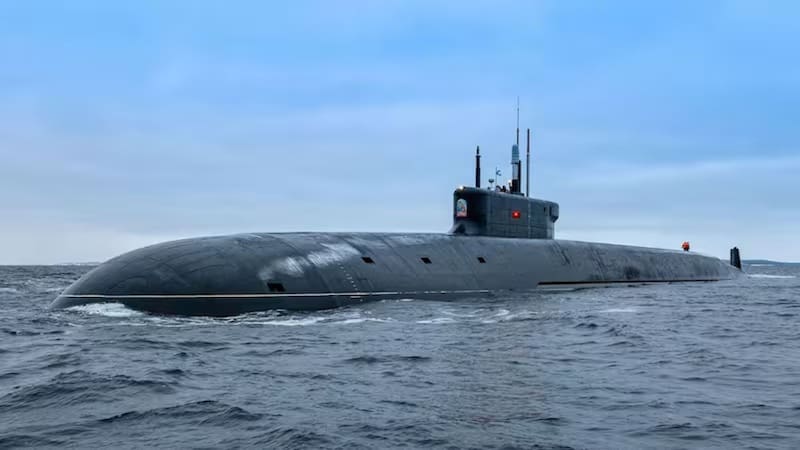
Japan’s maritime strategy took a new step with the addition of a modern submarine aimed at strengthening its presence in one of the most sensitive regions on the planet. The decision is part of a broader plan for military modernization and ocean control.
In an international context marked by geopolitical tensions, the arrival of this new unit reflects the Asian country’s interest in consolidating its surveillance and defense capabilities in the Indo-Pacific, a key area for global trade.

A technological renewal designed for silent warfare
The move is not isolated: it responds to a sustained policy of technological renewal that seeks to replace old units with more efficient, quieter, and better prepared systems for highly complex scenarios.
The new submarine added by Japan belongs to the Taigei class, a generation designed to improve operational performance in prolonged missions. It is a vessel equipped with advanced technology that allows it to operate for long periods without needing to surface.
Among its most notable features is its diesel-electric propulsion system with lithium batteries, which improves energy efficiency and reduces detectability.
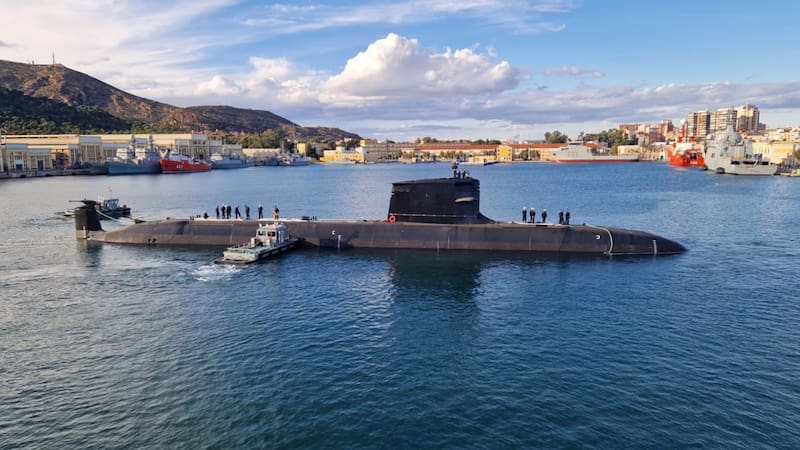
In addition, it can reach speeds above 20 knots while submerged and has a crew of approximately 70 people, with facilities adapted to the force’s new needs.
As for its offensive capability, it has torpedo tubes and anti-ship missiles, allowing it to operate in both defensive operations and naval combat scenarios.
The Indo-Pacific, the board on which global power is at stake
The addition of this unit is not only a technological upgrade, but also a geopolitical necessity. The Indo-Pacific has become a central point for the global balance of power, and Japan seeks to play an active role in that dynamic.
The submarine will be used for patrol, surveillance, and deterrence tasks, reinforcing the Maritime Self-Defense Force’s ability to monitor movements in the ocean.

In addition, its deployment makes it possible to expand Japan’s presence on strategic maritime routes, through which much of international trade passes.
With this addition, Japan continues to consolidate a modern and adaptable fleet, aligned with current challenges and prepared to respond to increasingly complex scenarios in the naval domain.