
En esta noticia
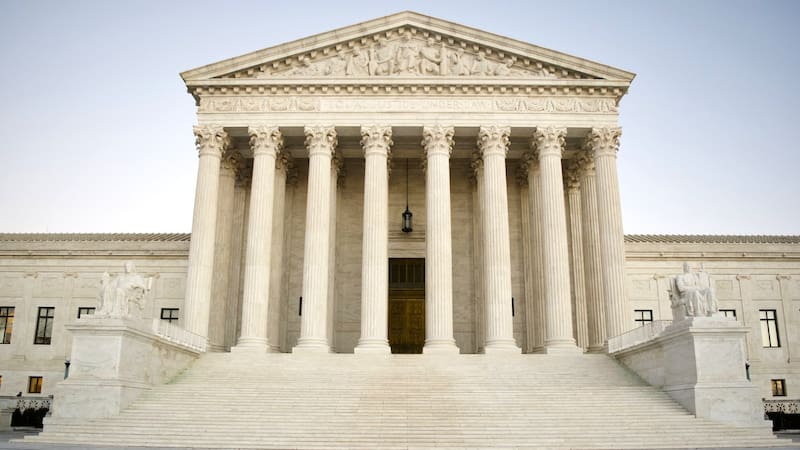
The Supreme Court of the United States authorized New Hampshire to maintain restrictions on the use of student credentials as voter identification documents a few days before the November 3, 2026 midterm elections.

The ruling was issued on Thursday, October 22 and partially reverses the previous court decision and establishes that IDs issued by schools and universities may not be used to verify voters’ identities or as alternative documentation.
What did the Supreme Court decide about student IDs in New Hampshire?
The Supreme Court allowed the ban on using student IDs during the November elections to be fully reinstated in New Hampshire after accepting the emergency appeal filed by local authorities and backed by the Republican National Committee (RNC).
The controversy began after Governor Kelly Ayotte enacted a law in April 2026 that removed school and university credentials from the documents accepted to prove electoral identity.
Later, the Secretary of State, David Scanlan, issued instructions to prevent these documents from also being used as alternative proof of identity.
On October 2, a federal court allowed the law to remain in place but partially blocked the additional instructions. Nevertheless, the Supreme Court considered that this judicial intervention would have taken place too close to the elections and reinstated the ban.
What documents will voters be able to use to identify themselves in the elections?
According to the New Hampshire Secretary of State, registered voters must present valid identification in order to receive their ballot. The following are accepted:
- Driver’s license issued by any state or by the federal government.
- Non-driver identification card issued by the New Hampshire DMV or by another state’s motor vehicle authority.
- Free identification card issued by the New Hampshire DMV exclusively for voting.
- United States Armed Forces identification.
- U.S. passport, both booklet and card formats.
Accepted IDs may be used up to five years after expiration. Those who do not have one of these IDs must go to one of the election supervisors so they can assess whether their identity can be verified through authorized procedures.
Who does this Supreme Court decision affect, and what supports it?
The decision mainly affects students who used their school or university credentials to prove identity, since they will have to present another authorized document during the November 3 elections.
Voting rights organizations warned that the measure could especially harm young people and low-income individuals who do not have a driver’s license or U.S. passport. However, local election officials noted that few students show up to vote with only an educational ID.
The Supreme Court’s decision is supported by the Purcell principle, a judicial precedent that establishes that federal courts should generally avoid changing election rules shortly before an election to prevent confusion among voters and authorities.