
En esta noticia
The Florida Department of Transportation (FDOT) carried out test flights of advanced electric air mobility aircraft over Tampa Bay as part of the pilot program coordinated by the Federal Aviation Administration (FAA).
These tests represent a step toward bringing so-called flying taxis to the United States, a technology that could transform passenger and cargo transportation, cut travel times and offer new mobility options in major cities.


How could these flying taxis transform transportation?
According to the FAA, the goal is to gradually integrate these technologies into U.S. airspace, for both passenger transport and cargo delivery. In Florida, the project calls for creating a network of air corridors linking different urban centers. In this way, passengers could travel between cities without relying solely on highways.
Joby Aviation representatives said a trip between St. Petersburg and Tampa, which typically takes about an hour by car in heavy traffic, could be completed in about 10 minutes by air.
What happened during these first test flights in Florida?
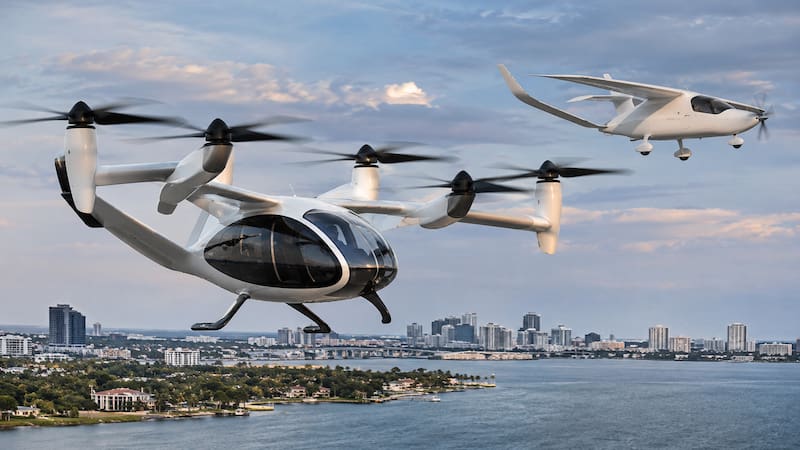
On Oct. 30, 2026, the Florida Department of Transportation held its first demonstrations with Joby Aviation and BETA Technologies. The tests recreated the route of the first regular commercial passenger flight, which took place in 1914 between St. Petersburg and Tampa.
During the demonstration, two electric aircraft took off from Albert Whitted Airport in St. Petersburg, flew in formation over Tampa Bay, then landed at Signature Aviation facilities at Tampa International Airport, and data were collected to assess how these technologies perform and how they could eventually be integrated into commercial transportation.
According to FDOT, these demonstrations will make it possible to study several factors, including aircraft noise, safety and integration into airspace. Testing will continue in November 2026, and both FDOT and Electra will conduct new flights in different locations in central Florida.
Which models were tested, and how are they different?
The tests conducted in Florida involved two electric aircraft models with major differences:
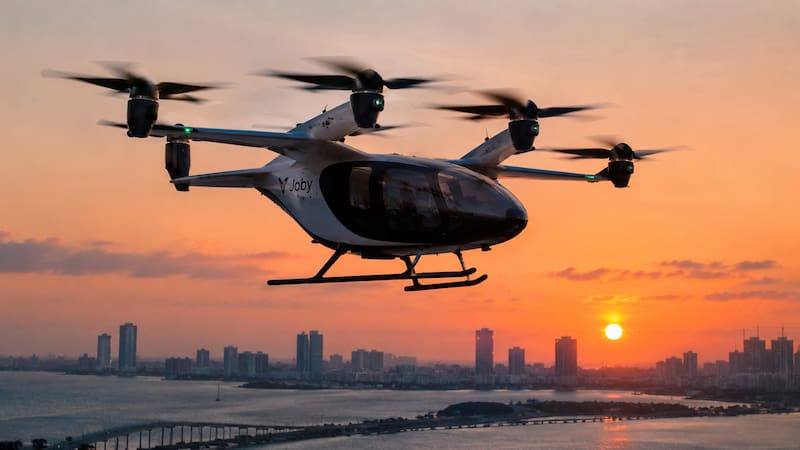
- Joby S4 from Joby Aviation: an electric vertical takeoff and landing aircraft (eVTOL) equipped with six tilting propellers. It is designed to carry one pilot and four passengers and does not need a conventional runway for takeoff or landing.
- ALIA CX300 from Beta Technologies: a fully electric conventional takeoff and landing aircraft (eCTOL). It does need a runway to operate and is designed to connect airports and provide regional passenger and cargo service.
What other benefits are expected from this new system?
Beyond reducing travel times, the FAA says the advanced air mobility program could create new economic opportunities and also expand access to essential services:
- Regional transportation to connect communities and cities through short-haul air routes.
- Building logistics networks to move goods between different locations.
- Making it easier to transport supplies and other health resources.
- Evaluating autonomous aircraft and advanced flight systems.
- Promoting new economic activity tied to aviation and airport services.
- Facilitating operations related to maritime activity and the energy sector.
The federal program includes eight projects spread across 28 states. Data gathered during the demonstrations could be used to develop new regulations that would allow these aircraft to be introduced safely.