
En esta noticia
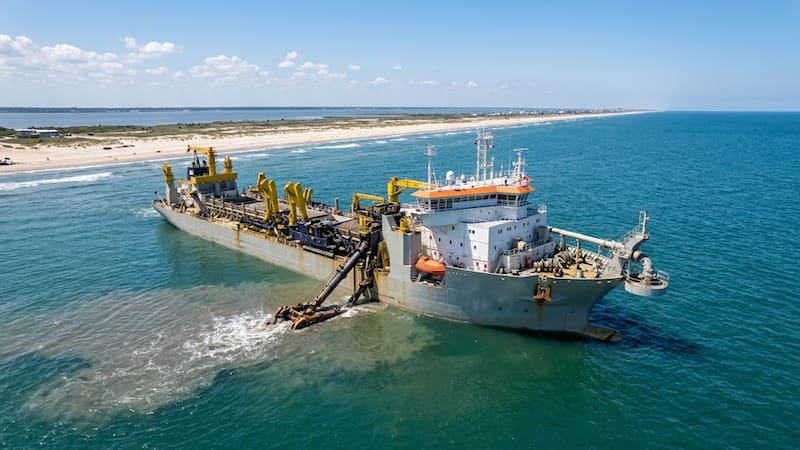
A new dredge is drawing attention along the Gulf Coast because of its enormous capacity and its potential role in moving sediment for coastal projects. The Frederick Paup can hold up to 15,150 cubic yards of material, making it the largest self-propelled trailing suction hopper dredge built in the United States.
The vessel was built in Brownsville, Texas, and delivered to Manson Construction in January 2026. It measures about 420 feet long and 81 feet wide and is powered by approximately 25,000 horsepower.

A dredge built for major coastal projects
The Frederick Paup is designed to remove sediment from the seafloor and transport it to other locations. Its first confirmed assignment involved maintenance dredging for navigation channels in Mobile, Alabama.
Dredged material can also be used beneficially for projects such as beach nourishment, coastal protection, and habitat restoration. Federal policy encourages the beneficial use of suitable dredged sediment, with the Army Corps of Engineers targeting the beneficial use of 70% of dredged material by 2030.
Why sand temperature matters for sea turtles
The connection to sea turtles comes from the biology of their nests. Temperature during incubation plays a major role in determining the sex of sea turtle hatchlings. Warmer sand generally produces more females, while cooler conditions produce more males.
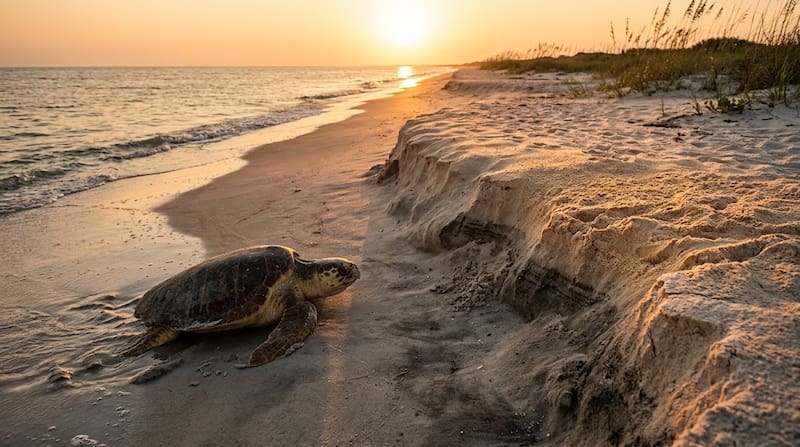
That does not mean the Frederick Paup itself has been proven to alter the sex ratio of sea turtles. The effect depends on the characteristics of the sand placed on beaches, including factors that can influence how much heat is retained.
As coastal communities increasingly use dredged sediment for beach nourishment and restoration, the composition and temperature of that sand can therefore become an important consideration for beaches where sea turtles nest.