
En esta noticia
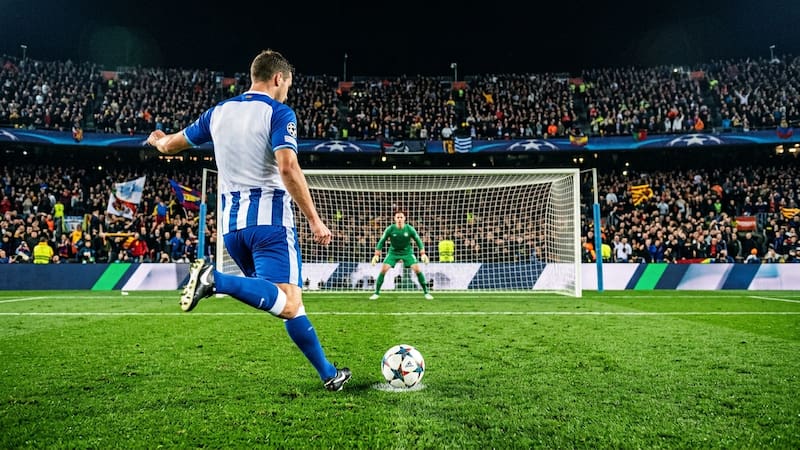
In soccer, penalty kicks are one of the most tense moments in a match. Although they may seem simple, their execution is governed by specific rules that cover everything from where the ball is placed to what the player can do after taking the shot.
One key detail is that the penalty spot is located at an exact distance from the goal, a measurement used in every official match. In addition, there are restrictions on how the kick must be taken and what happens if the player touches the ball again.
The rules of the International Football Association Board (IFAB) explain why that distance was set and what penalty applies when the kicker touches the ball twice before another player intervenes.

Why the penalty spot is exactly 11 meters from the goal
The distance between the penalty spot and the goal line is not up to the referee, nor can it vary from stadium to stadium. Law 1 of the International Football Association Board (IFAB) states that the spot from which penalty kicks are taken must be 11 meters from the center of the goal.
This mark is inside the penalty area and must be clearly marked. The measurement is part of the regulation dimensions of the playing field and ensures that all teams play under the same conditions, regardless of where the match is held.

What happens if a player takes a penalty, the ball hits the post and comes back to him
IFAB Law 14 says the player taking a penalty cannot touch the ball again until another player has touched it. That means if he shoots, the ball hits the post and comes straight back to him, he cannot take a second shot to try to score.
If he does so deliberately, the referee must award the other team an indirect free kick. The situation is different if the ball rebounds off the goalkeeper, since the goalkeeper is another player, and the kicker can then touch it again.
IFAB also covers accidental double touches, such as when a player slips and touches the ball with both feet during the kick. If the ball goes into the goal, the penalty is retaken; if it does not, an indirect free kick is awarded to the defending team.