
En esta noticia
Among the homemade cleaning tricks that really work, there’s one that combines two things almost everyone has in the kitchen: lemon peel and salt. Rubbing one against the other on certain surfaces leaves them clean and shiny, without the need for industrial products. And that’s no coincidence: there’s a specific chemical explanation.

What Rubbing Lemon Peel With Salt Is Good For
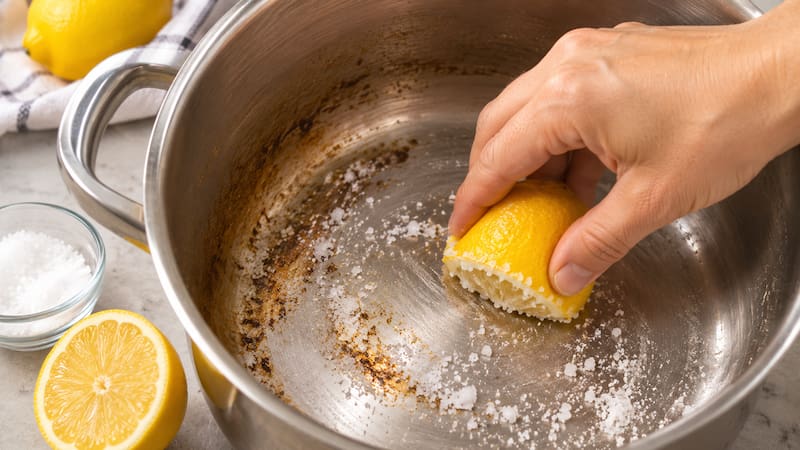
The lemon peel-and-salt mixture is mainly used to clean and restore the shine to copper and brass items that have become dull or dark over time: pots, pans, pitchers, faucets, and decorations.
It also helps remove stains and polish stainless steel items, make faucets gleam, clean and deodorize wooden cutting boards, leaving behind a fresh scent as well. In short, it is a multipurpose homemade cleaner for metals and durable surfaces.

The trick does not just cover up dirt: it attacks it in two ways at once. The lemon peel provides citric acid, a mild acid that dissolves the dull layer of oxidation that forms on copper and brass (that faded or greenish tint) and cuts through grease.
Salt, meanwhile, acts as a mild abrasive: its grains help scrub away and lift off dirt and the loosened oxidation without being so harsh that it scratches the metal. Together, the acid and the abrasive do the work of a descaler and a sponge, but with natural ingredients.
Step by step: How to make the mixture at home
The process is very simple:
- Take half a lemon peel (or half a lemon with the pulp still attached, which adds more juice).
- Sprinkle coarse or fine salt directly on the inside of the peel, or on the surface to be cleaned.
- Rub the peel firmly over the copper, brass, steel, or cutting board. The salt acts as the abrasive, and the lemon juice as the descaler.
- Focus on the dirtiest spots; you will see the metal regain its shine.
- Rinse well with water to remove any remaining acid and salt, and dry with a soft cloth to avoid new marks.
Why It’s Recommended
Beyond the results, the appeal is twofold. On the one hand, it is cheap and eco-friendly: it makes use of a leftover — the peel that would otherwise be thrown away — and a very inexpensive product like salt, instead of buying metal polish.
On the other hand, it is gentler on pieces than many strong industrial abrasives, which can scratch or wear them down. It also leaves behind a pleasant citrus scent and avoids spraying chemicals in areas where food is handled, such as the kitchen.