
En esta noticia
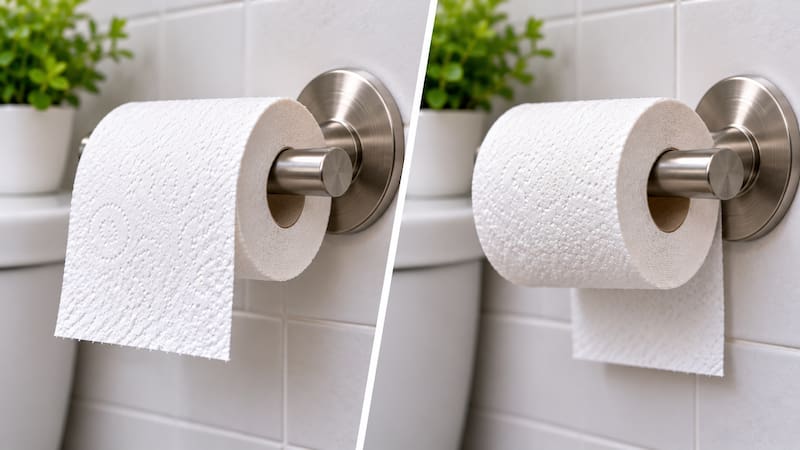
When using toilet paper, a question can come up about how it should be positioned: should it face forward or backward? There are differences between placing the toilet paper forward, with the loose end over the top of the roll and away from the wall, or installing it backward, with the end hanging between the roll and the wall.
However, the debate is not new. There is even a 1891 U.S. patent that is often used as an argument in favor of one of the two ways.
What the 1891 U.S. patent says
One of the best-known arguments for placing the paper forward comes from patent US465588A, registered by Seth Wheeler, an inventor from Albany, New York.
The document was filed in June 1891 and granted in December of that year. Its illustrations show a roll with a sheet hanging over the front, an image that became a common reference for defending that orientation.
Wheeler said his invention was meant to make it easier to separate the sheets: “The curved mode of dividing the sheets permits the end of a sheet to be found more readily” (the curved design made it easier to find the end of the paper).
Is it better to place toilet paper forward or backward?
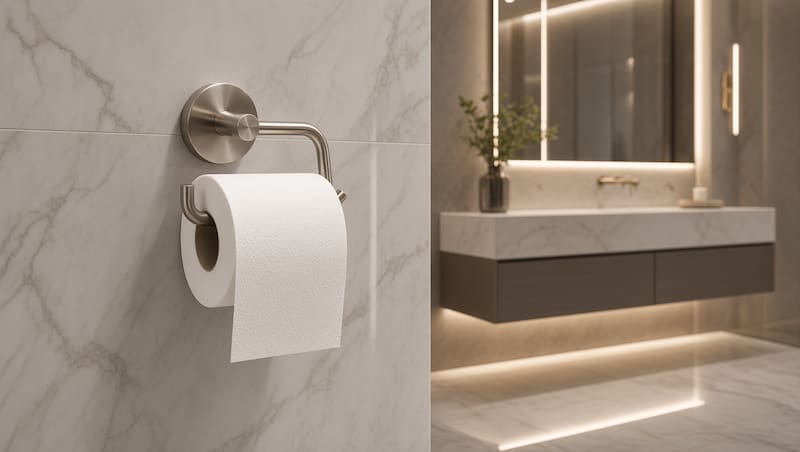
The forward position is usually the most comfortable for everyday use because it makes it easy to quickly spot the end of the paper, grab it and pull off the amount needed. It also keeps you from having to reach between the roll and the wall to find the end.
This arrangement can also make it easier to tear off sheets, especially when the holder has a bar that lets the roll turn freely.

For its part, placing the paper backward has some practical advantages:
- Less exposure of the end: the tip is more visually protected behind the roll.
- Less reach for some pets: it may make it harder for dogs or cats to play with the paper by finding the end hanging down.
- Aesthetic preference: some people think the bathroom looks neater with the paper facing the wall.
So there is no single required position. The choice depends on the holder, the bathroom layout and the preferences of the people using the space.