
En esta noticia
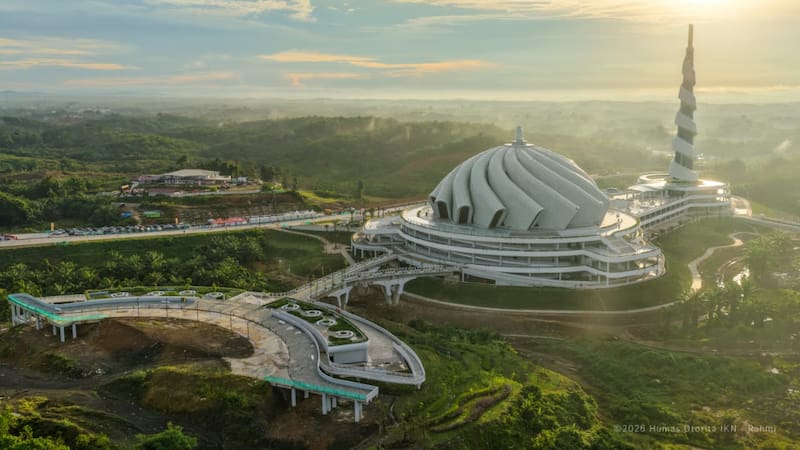
Indonesia is moving ahead with the construction of the futuristic city in the middle of the jungle that seeks to become its new capital and transform the country’s urban development. The project, called Nusantara, is being developed on the island of Borneo and includes smart buildings, technological infrastructure, and planning that combines urbanized areas with green spaces.
The new capital will cover a strategic area of more than 250,000 hectares and will include a presidential palace, government buildings, housing, and public services. Work began in 2022 and is advancing in stages, with the goal of making Nusantara the country’s political center starting in 2028, while its development will continue over the coming decades.
One of the project’s most ambitious aspects is its goal of being supplied with 100% renewable energy and reaching net-zero emissions by 2045. To achieve this, Indonesia is promoting a strategy that includes energy efficiency, forest protection, and sustainable resource management.
Where are they building the futuristic 250,000-hectare city, and why will it be in the middle of the jungle?
Indonesia’s new capital is called Nusantara and is being developed in East Kalimantan province, on the island of Borneo. The Indonesian government is promoting this project to gradually move the capital’s functions from Jakarta and create a new administrative, economic, and urban center.
According to the Nusantara Authority, the project’s national strategic area covers more than 250,000 hectares, although not all of that surface will be occupied by buildings; it includes development zones and areas that are expected to be preserved as green and forest spaces. The plan calls for more than 75% of the capital’s area assigned to the project to be kept as green spaces, with protected sectors and land for food production.
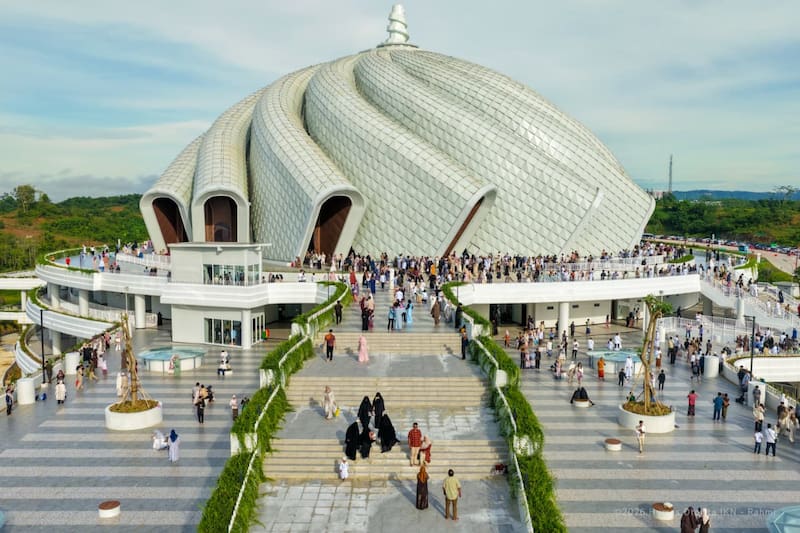
The choice of East Kalimantan also responds to its location, close to cities such as Balikpapan and Samarinda, and to the existence of road infrastructure, airports, and water sources. Although the new capital is still unfinished, some of its facilities are already in operation, such as the Nusantara state mosque, where the first Eid al-Fitr prayer was held on March 21, 2026.
At the same time, work continues on government buildings and the infrastructure needed for the city to gradually assume its functions as Indonesia’s political capital.
What will Indonesia’s new capital be like and what smart buildings will it have?
Nusantara is designed to become a smart city, with technology applied to buildings, public services, transportation, and resource management. The Nusantara Authority published an official guide for the construction of smart buildings in August 2023, which sets criteria to improve efficiency in the use of energy, water, and air, as well as reduce emissions and optimize the conditions of indoor spaces.
Among the project’s constructions are the presidential palace, ministry offices, housing for officials, schools, hospitals, businesses, and public transportation networks.
Likewise, the work is being carried out in stages, with the tasks concentrated in the main government core and extending to other areas, according to the Nusantara Authority, in December 2025.
The official goal is for the city to be ready to function as the political capital in 2028, while its overall development will continue until 2045.
How will the city Indonesia is building in the jungle run on 100% renewable energy?
Indonesia set as a goal renewable energy facilities to cover 100% of Nusantara’s energy needs. The target is part of the environmental strategy for the new capital, which also aims to improve the energy efficiency of public buildings and reduce polluting emissions associated with the city’s operation.
The official strategy Nusantara Net Zero Strategy 2045, developed by the Nusantara Capital Authority with the support of the Asian Development Bank and funding from the Australian government, sets out a roadmap to achieve net-zero emissions in 2045.
The plan covers six main areas, including energy, forest and land management, waste, agriculture, and industrial activities.
The initiative also aims to preserve and restore the region’s forest ecosystems. In this sense, the government plans to develop a city that integrates urbanized areas with green spaces and protected zones.