
En esta noticia
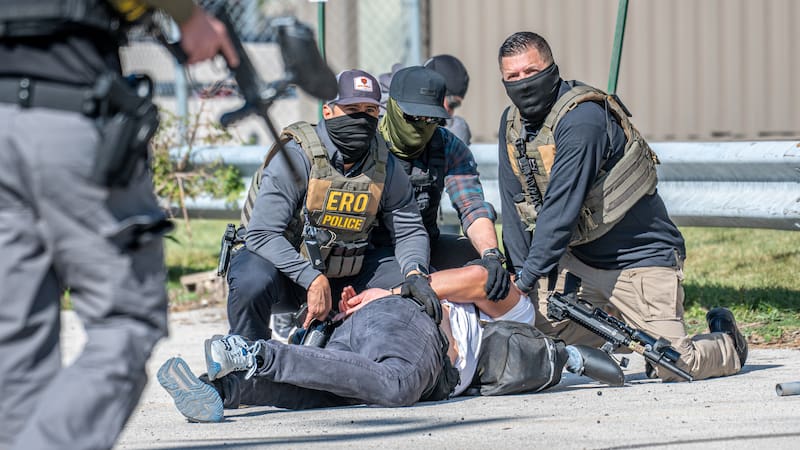
Until now, every ICE arrest followed the same script: agents detain, then transport. A new federal solicitation, obtained by the investigative watchdog group Project Salt Box, proposes breaking that pattern.
The agency is seeking to contract what it calls “mobile detention facilities”: vans equipped to hold people at the scene of the arrest itself, without immediately transporting them to an office or processing center. The plan, still in the bidding stage, targets Pennsylvania first.

How the new ICE system works
The document is part of a broader expansion of the immigration detention system, with 10-year contracts for four regions and a total capacity of 5,500 beds. In Pennsylvania, ICE proposes using these vehicles as temporary detention spaces at the arrest site itself, so agents can keep working in the field instead of stopping the operation to transport each detained person. The documents describe these units as a mobile extension of detention centers: they would stay near arrest teams and function as such until the vans filled up or the operation in that area ended.
Michael Wriston, co-founder of Project Salt Box and a retired military intelligence analyst, summed up the project with a concrete image: what they describe is a network of vans that would follow agents into the field as they carry out arrests. Wriston noted that the document conspicuously lacked any mention of operating standards — it doesn’t explain how long a person could remain inside a van, how they would access a bathroom, or how they would be fed.
The idea echoes something ICE’s acting director, Todd Lyons, had floated publicly in April 2025. At the Border Security Expo in Phoenix, Lyons said the agency needed to start treating this like a business, adding that he wanted to see a deportation process that was like Amazon Prime, but with human beings. In that same appearance, he spoke of his hope for squads of trucks crisscrossing the country to arrest immigrants, the same way Amazon vans crisscross cities delivering packages.
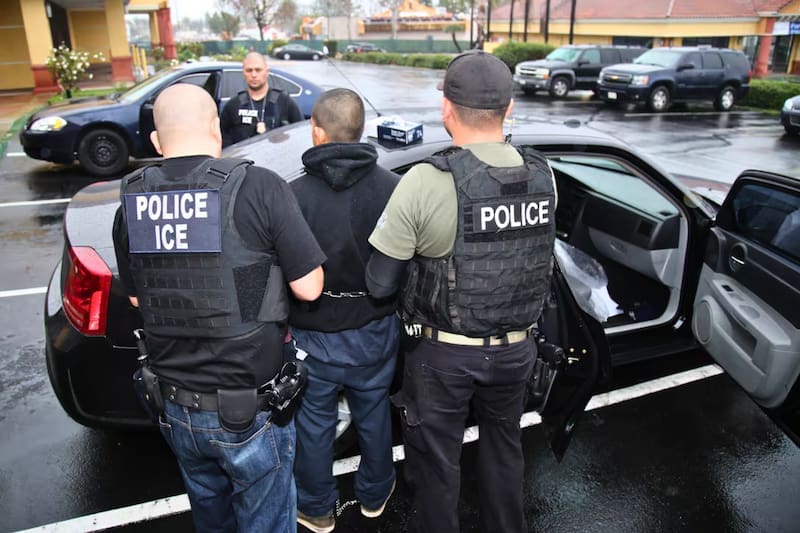
For the Philadelphia region, which covers Pennsylvania and Delaware, ICE is requesting 12 additional transport teams per day, seven days a week, spread across seven locations, plus new operations centers in Pittsburgh and Dover (Delaware). The units would be run by GTI, the transportation subsidiary of GEO Group, one of the country’s largest private detention contractors.
The vans and their gray areas
The requirements call for interior cages, acrylic panels separating the driver from passengers, locks on doors and windows, backup radios, and at least one unit adapted for people with disabilities. Each trip would require two agents, and all transport personnel would have to be armed.
Despite that technical detail, information about the conditions of the people held inside them is scarce. The only concrete restriction states that, except in emergencies, women cannot be transported by bus for more than 10 hours. There is no equivalent limit for men, nor a specific duration set for how long someone could remain in the vans used as mobile detention facilities. There are also no rules on food, water, restrooms, temperature or medical care during transport. The only provision related to the treatment of detainees requires that transport be “safe and humane,” with no further detail.
The project also involves dozens of routes and hundreds of thousands of miles a year. The Pennsylvania routes alone would add roughly 372,000 miles (598,000 km) a year, while the ones planned for Miami would reach about 784,000 miles (1.26 million km). Some routes out of Denver would exceed 10 hours of travel: one between Denver and Phoenix, for instance, covers 865 miles (1,392 km).

The fixed system behind the vans
The solicitation calls for four detention centers in Pennsylvania, Colorado, Washington and Florida, with capacities ranging from 700 to 1,800 people each. Those centers would include immigration courts, offices for ICE attorneys, spaces for asylum interviews, medical care, food service and other operations tied to the deportation process. In Pennsylvania, the vans would function as an extension of that model: holding detainees until the operation is complete or the vehicles fill up, before transferring them to those fixed centers.
The geographic focus on Pennsylvania is no accident. According to Wriston, it reflects the fact that it’s a large state where many police departments are barred from cooperating with ICE, which means detained migrants can’t be held in local jails. The mobile facilities would function, in that sense, as a workaround to sustain operations in areas where the agency lacks fixed detention capacity. The idea also comes after another expansion project stumbled: ICE had begun buying up large warehouses to convert into mega detention centers, but that plan failed, and the agency ended up selling off most of those properties.
Where the record budget for ICE expansion comes from
The pivot toward mobile units comes amid a much broader expansion of detention infrastructure. The Sunday before these documents came to light, the Department of Homeland Security (DHS) signed construction contracts worth more than $7 billion to expand immigration detention in New York, Texas, Arizona, Florida and California, and announced further expansion in Colorado, Washington and Pennsylvania.
Behind this expansion is an unprecedented jump in funding: an additional $75 billion from the One Big Beautiful Bill Act made ICE the best-funded law enforcement agency in the United States. During a GEO Group earnings call in August, an investor asked CEO George Zoley whether ICE was still aiming for 100,000 operational beds. Zoley said yes, for the most part, and specified that the agency had 68,000 beds at the time — of which GEO Group operates 24,000, more than a third of the total — leaving roughly 30,000 more to reach that figure.