
En esta noticia
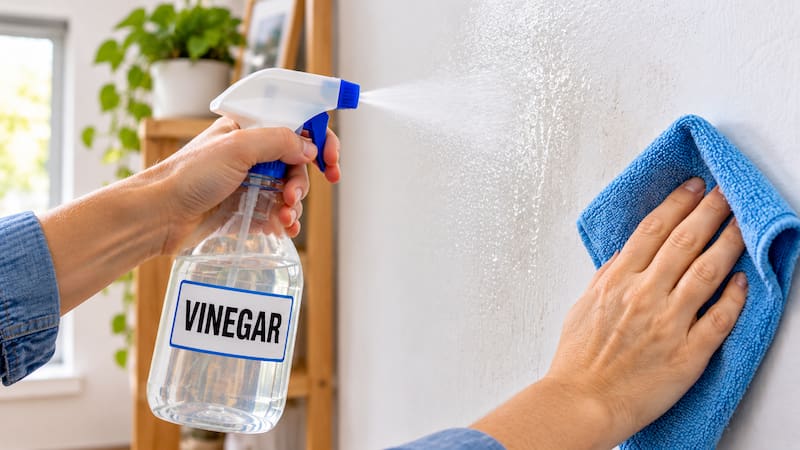
Humidity can leave stains, marks and residue on the walls of the home, affecting the appearance and cleanliness of the space. In this context, there are different household products that can help keep the space clean and disinfected.
One of them is white vinegar, which contains acetic acid and has chemical properties that help remove certain deposits, grime and bacteria.
Its usefulness is mainly related to its ability to act on mineral residue and certain surface buildup. In addition, different scientific studies have analyzed the antimicrobial activity of acetic acid, one of its main components.
What spraying vinegar on the walls of the house is good for
White vinegar can be used to clean certain surface stains and mineral residue on surfaces compatible with acidic products.
Its main active ingredient is acetic acid (CH₃COOH), an organic acid that helps dissolve some buildup that sticks to surfaces.
This property is useful for removing mineral deposits left by water, soap scum and certain surface marks. When it comes into contact with these residues, acetic acid can react with their components and make them easier to remove through cleaning.
In addition, a 2020 study published in BMC Microbiology, conducted by researchers at the Rhine-Waal University of Applied Sciences, evaluated the antibacterial, antifungal and antiviral activity of acetic acid and found effects at certain concentrations and under laboratory conditions.
In particular, the researchers found that a solution with 10% acetic acid and 1.5% citric acid significantly reduced different bacteria and fungi.
How to properly apply vinegar on walls
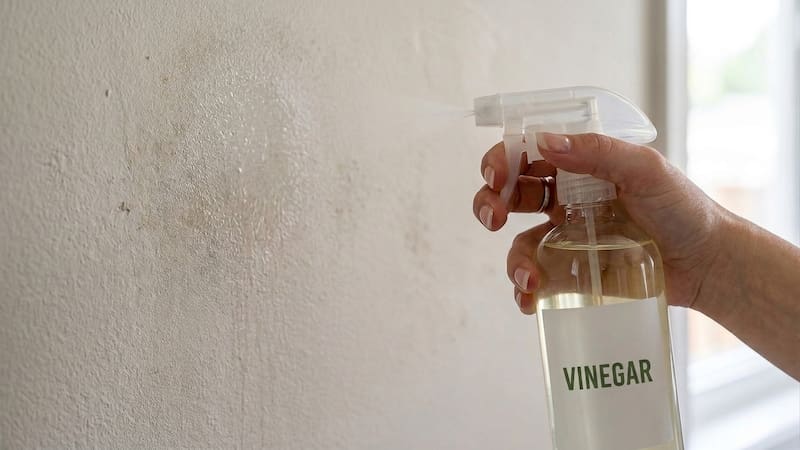
Before using vinegar, it is important to identify the surface material. On acid-resistant surfaces, such as certain ceramics and tile, it can be used to remove mineral deposits and water spots.
To do it properly, follow these steps:
- Prepare the surface: remove dust and loose dirt with a dry cloth.
- Test it first: apply a small amount of vinegar to an inconspicuous area to make sure it does not affect the material.
- Apply sparingly: use a cloth slightly dampened with white vinegar or a spray bottle.
- Remove the residue: wipe with another clean, damp cloth if the material allows it.
- Dry: finish with a dry cloth to prevent water from pooling on the surface.

What precautions to take before cleaning with vinegar
Although it is a common household product, vinegar should not be mixed with other cleaners without knowing what’s in them.
One of the most dangerous combinations is vinegar and bleach. Mixing acetic acid with sodium hypochlorite can release chlorine gas, a toxic substance that causes eye and respiratory irritation and can lead to lung damage.
It should also not be used on calcium-based natural stone surfaces, such as marble and travertine, because its acidity can damage them.