
En esta noticia
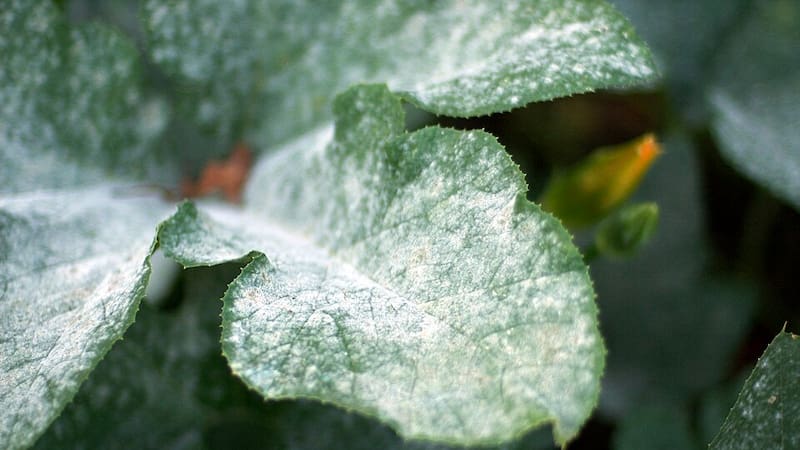
Spraying baking soda on the leaves of the plants in your garden can help control powdery mildew, a fungus-caused disease that shows up as a white or grayish powder on the surface of plants. This problem can affect different species, including tomatoes, and weaken their leaves if the infection spreads.

The study The Effect of Sodium Bicarbonate on Powdery Mildew in Tomato, published in 1999 by the International Society for Horticultural Science, evaluated the effectiveness of sodium bicarbonate against powdery mildew in three tomato varieties grown in a greenhouse. The results were previously presented at a symposium held November 3-5, 1997, in Antalya, Turkey.
What does the scientific study say about baking soda on plants?
Powdery mildew is a fungal disease that produces a whitish coating on leaves, stems, and, in some cases, flowers. If the infection progresses, it can cause discoloration, deformities, and slower plant growth.
The study evaluated the effectiveness of sodium bicarbonate against powdery mildew in three tomato varieties grown in a greenhouse and found that it can help reduce the fungus’s growth and limit the spread of the disease.
How does baking soda work against the white powder on leaves?
The researchers compared this treatment with sulfur and a fungicide based on triforine. According to the results, five applications of baking soda were needed to control the disease, while sulfur was able to prevent it entirely after two applications.
No statistically significant differences were found in the yield of the three varieties. In that sense, the study shows that baking soda can be an alternative for controlling powdery mildew.

What precautions should be taken before applying it?
Although baking soda can help control some fungi, using it in excess can damage plant tissue. For that reason, it’s important to avoid overly concentrated mixtures and to test any treatment first on a small part of the plant.
It is also advisable to avoid applying it during hours of intense sun, since high-radiation conditions can increase the risk of phytotoxicity, that is, damage to plant tissue, according to a 2003 study published in the journal Communications in Agricultural and Applied Biological Sciences.