
En esta noticia
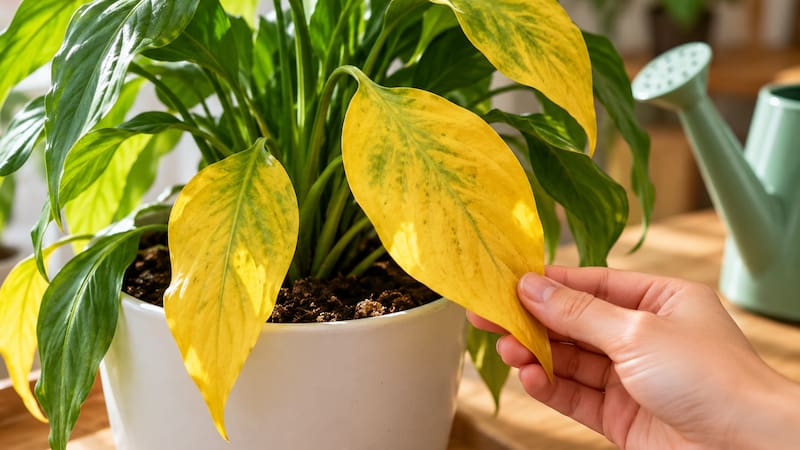
Yellow leaves on plants can be a sign that something is not working properly, but they do not always mean the plant needs water. In some cases, adding more water can make the problem worse and put root health at risk.
According to Utah State University, overwatering is one of the main causes of problems in houseplants. The university warns that keeping soil too wet can encourage organisms that cause root rot.

Why can overwatering cause yellow leaves on plants?
When soil stays saturated, roots can be damaged by a lack of oxygen. This makes it harder for the plant to absorb water and affects its growth.
Experts warn that too much moisture can cause symptoms similar to drought, such as wilted or yellowing leaves. That is why watering again without checking the soil can make the problem worse.
The university also says that a growing medium that is too wet can encourage organisms that cause root rot, especially in houseplants.
How can you tell if a plant needs water before watering it?
The university recommends checking the soil moisture instead of following the same watering schedule for every plant.
To tell whether they need water, experts recommend:
- Insert a finger a few inches into the soil: This lets you check whether the growing medium is still moist below the surface.
- Look at the soil: if it is light in color, cracked and pulling away from the sides of the pot, it may be too dry.
- Watch for excess moisture: a dark, slimy growing medium can indicate too much water and a risk of root rot.
- Check the drainage: when watering, the water should be able to drain through the holes in the pot. After about an hour, it is a good idea to remove any water that has collected in the saucer.

The watering frequency depends on factors such as light, temperature, humidity, pot size and the type of growing medium. That is why there is no single number of days between waterings that works for every plant.