
En esta noticia
Toilet cleaning is one of the most significant activities within the home, since it helps keep the bathroom properly maintained and prevents dirt from building up. Faced with the wide range of commercial products, a significant number of people prefer to turn to homemade alternatives that have been part of cleaning practices for years.
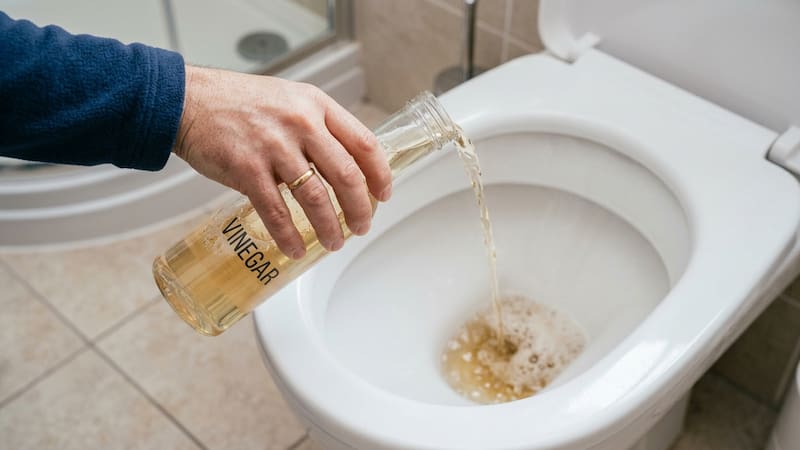
One of the most popular options is to apply white vinegar regularly to help with toilet hygiene. This ingredient is highly valued for its properties that dissolve mineral residue and reduce unpleasant odors, which explains its continued status as one of the most popular household tricks.

Why is white vinegar the natural and effective ally for cleaning the bathroom?
The main secret of white vinegar lies in its composition. This liquid contains approximately 5% acetic acid, a natural component that acts directly on the common bacteria and germs that proliferate in humid environments.
Microbiological research published in the magazine Scientifica shows that acetic acid has the ability to penetrate the cell walls of common household pathogens (such as Salmonella or Pseudomonas aeruginosa), eliminating them effectively.
Regular application of vinegar around the rim and base of the bowl allows a considerable reduction in the microbial load, without requiring the environment to be saturated with the harsh vapors of industrial disinfectants.
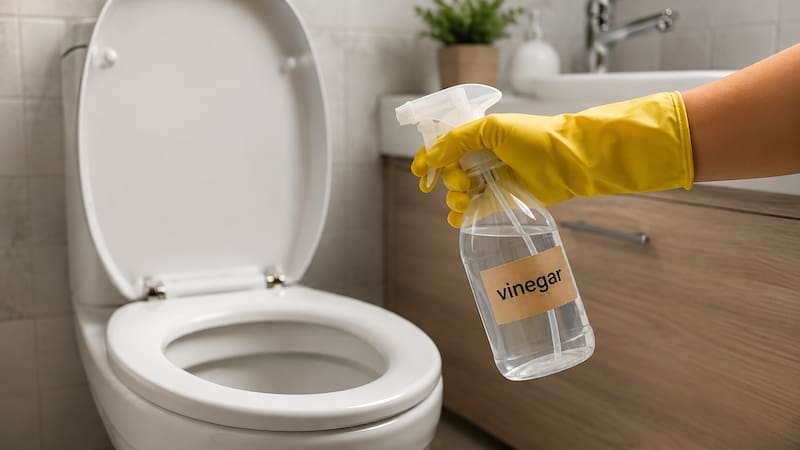
Vinegar effectively eliminates bad toilet odors
Unlike commercial toilet deodorizers that merely mask undesirable aromas with strong artificial fragrances, vinegar acts by neutralizing those odors at their source.
Bad odors in toilets are usually caused by the decomposition of organic remains and the accumulation of moisture in hard-to-reach areas.
The acidic pH of vinegar changes the environment in which the bacteria responsible for bad odor proliferate, breaking down odor molecules and allowing the environment to remain truly fresh and neutral for an extended period.
Say goodbye to limescale and unsightly yellow stains
This roughness is not only unsightly, but it also acts as a perfect “anchor” where germs adhere and multiply.
The water that supplies our homes carries minerals such as calcium and magnesium. Over the days, this “hard water” generates limescale deposits—commonly known as scale—which form a rough, yellowish film on porcelain and ceramic.
By pouring vinegar once a week, its acidity chemically dissolves these accumulated mineral deposits, keeping surfaces smooth and shiny and preventing those stubborn yellow stains from appearing on the base or bottom of the bowl.
To optimize the benefits of white vinegar in your toilet, home maintenance experts suggest carrying out this simple procedure weekly:
- Pre-cleaning: remove dust, hair, and lint from the outside base of the toilet with a dry cloth to prevent the formation of a pasty layer when applying the liquid.
- Spraying: pour pure white vinegar into a spray bottle and generously spray the rim, the joint with the floor, and the inner walls of the bowl.
- Waiting time: allow the product to act for a minimum of 10 to 15 minutes. This period is essential for the acetic acid to dissolve the scale and act as a disinfectant.
- Rinsing and drying: use a damp cloth or paper towel to remove the loosened residue and dry the area properly to prevent moisture from attracting new dust.
Under no circumstances should white vinegar be mixed with bleach or chlorine-based products. This combination causes a chemical reaction that releases chlorine gas, a highly toxic substance that can cause serious and irreversible damage to the respiratory tract.