
En esta noticia
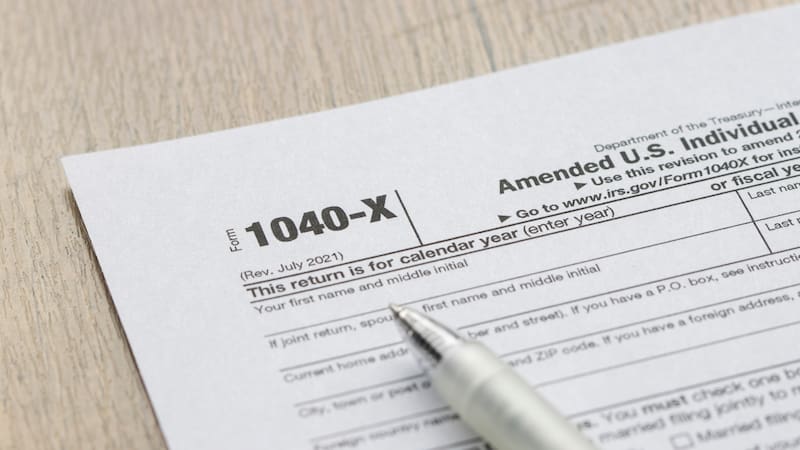
The Internal Revenue Service (IRS) allows taxpayers to correct errors in their tax returns through Form 1040-X.
This procedure has specific deadlines that must be respected, especially when the changes allow an additional refund to be claimed or access to a tax benefit that was not included in the original return.


What is Form 1040-X and who must file it?
Also known as the “Amended U.S. Individual Income Tax Return”, this document allows a tax return that has already been filed to be corrected.
According to the IRS official website, it must be used by taxpayers who, among other situations, need to modify the information reported on the Forms 1040, 1040-SR and 1040-NR.
The changes that can be made include:
- Correct errors in the reported income, deductions or tax credits.
- Modify the filing status used on the return, when the rules allow it.
- Update amounts that the IRS has already adjusted previously.
- Claim certain benefits or make tax elections after the deadline, when permitted.
- Claim a refund for unused losses or credits that may be carried over from other tax periods, when applicable.
However, not all errors require the filing of an amended return.

Why is it important to file it on time?
Filing the amended return within the corresponding deadline is especially important when the taxpayer seeks to obtain an additional refund or claim a tax credit that was not included in the original return.
If Form 1040-X is filed late, the taxpayer could lose the right to claim a refund. If the correction involves additional taxes due, interest and penalties may also apply.
According to the IRS, to claim a refund, taxpayers generally have up to three years from when they filed the original return or two years from when they paid the tax. The deadline that gives them more time is used.
How do you fill out Form 1040-X?
To complete Form 1040-X, the IRS recommends having a copy of the original return, the documents supporting the changes and the instructions corresponding to the tax year to be corrected.
- Identify the tax year: indicate the period to which the return you want to amend corresponds.
- Fill in personal information: include name, current address and Social Security number (SSN) or taxpayer identification number (ITIN).
- Indicate the original amounts: in column A, enter the amounts previously reported or adjusted by the IRS.
- Record the changes: in column B, note the corresponding increases or decreases.
- Calculate the corrected amounts: in column C, enter the final amounts after applying the changes.
- Explain the corrections: use Part II of the form to detail the reasons for the changes.
- Attach the necessary documentation: include the forms and attachments that support the changes, as applicable.
- Sign and file: submit the amended return electronically, when this option is available, or by mail.
The IRS allows Form 1040-X to be filed electronically to correct returns for the current tax year and the previous two years, provided the requirements for using this method are met. Paper filing also remains available.