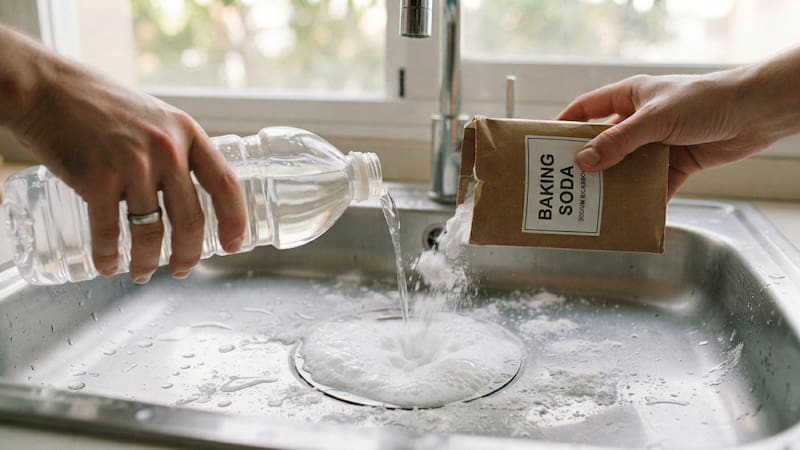

It’s one of the most popular cleaning tricks: pour baking soda and white vinegar down the drain, watch it bubble and hope it unclogs the pipe.
The scene is eye-catching, and the mixture is cheap and natural, but it helps to understand what the reaction actually does, because there is a simple chemical explanation behind the trick.

What it’s for
The honest answer is that it’s for maintenance and odors. The fizz created by the mixture can help flush away loose debris, light grease and grime stuck to the drain walls, and leave a fresher smell.
What happens when they’re mixed
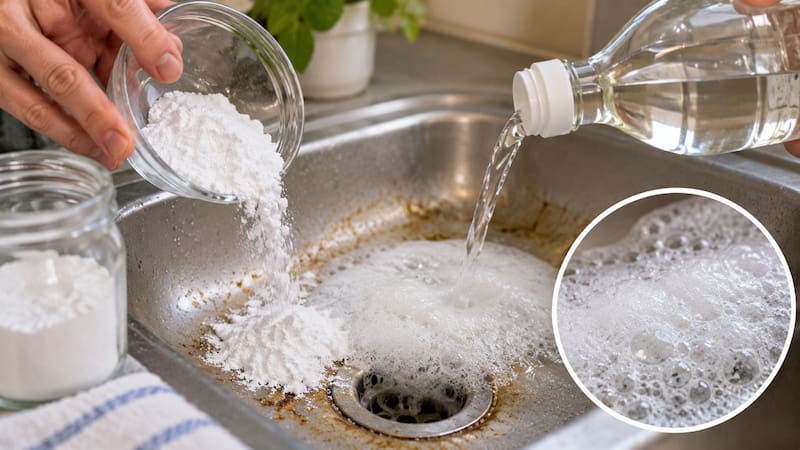
This is where the chemistry comes in, and it’s key to understanding the limits of the method. Baking soda is a base and vinegar is an acid (acetic acid). When they’re combined, they react and produce carbon dioxide, the gas that creates all that bubbling foam, water and a salt called sodium acetate.
The crucial detail is that in this reaction, the acid and the base neutralize each other: once the bubbling stops, what’s left is mostly water with a little salt. In other words, the fizzing show is exactly the moment when both ingredients consume each other and lose their cleaning power on their own.
Why it’s recommended
If they neutralize each other, why is it so popular? For several good reasons:
- They’re inexpensive products that almost everyone has at home.
- It’s a natural, low-toxicity option compared with harsh chemical drain cleaners.
- For routine cleaning and odor control, it does a reasonable job, which is why it’s recommended as maintenance.
How to do it right
To use it for what it is, maintenance, a common method is:
- First, pour in about half a cup of baking soda down the drain.
- Then add a similar amount of white vinegar and let the mixture bubble for 5 to 15 minutes.
- Finish by rinsing with hot or boiling water, which is largely what helps carry away grease and residue.
- Repeat every so often as preventive cleaning, not as an emergency fix.
An important safety warning: never mix vinegar (or any acid) with bleach, because that combination releases toxic gases. Vinegar and baking soda, by contrast, are safe together; the caution is not to combine them with chlorinated cleaning products.