
En esta noticia
White vinegar is one of the most widely used ingredients for household cleaning to help remove mineral residue, soap scum, and bad odors. Its combination with natural herbs creates a homemade cleaner with an aroma that is more pleasant than vinegar alone.
Mixing white vinegar with bay leaves has no chemical purpose: its goal is to enhance the natural aroma to mask the strong smell of vinegar. This combination can be used to clean different surfaces around the home.
What mixing white vinegar and bay leaves is good for
This mixture has multiple uses; it can be used to:
- Clean the inside of the refrigerator and help neutralize odors
- Clean shelves and drawers in empty cabinets and pantries
- Sanitize kitchen countertops and tiles.
- Clean the outside of the refrigerator and other appliances
- Freshen the inside of the trash can once it has been washed
- Clean doors, handles, and other washable surfaces
To do this correctly, it is necessary to follow a recipe.
How to mix white vinegar and bay leaves
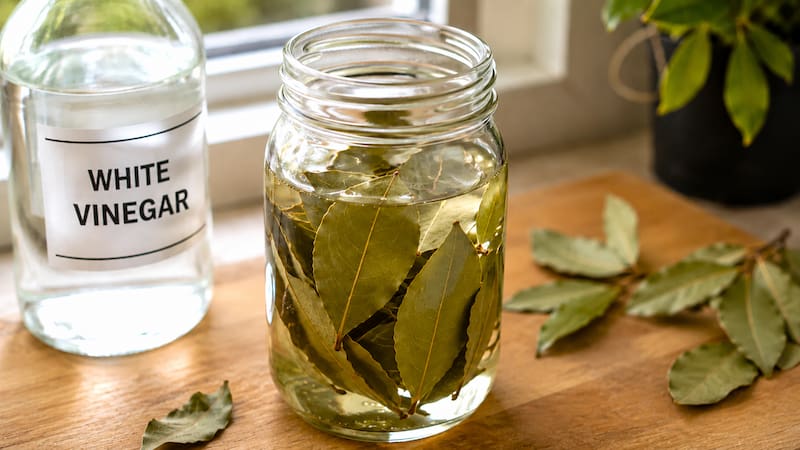
In a glass jar with a lid, pour 500 ml of white vinegar and between 8 and 10 bay leaves, then seal it again and let it rest in a cool, dark place.
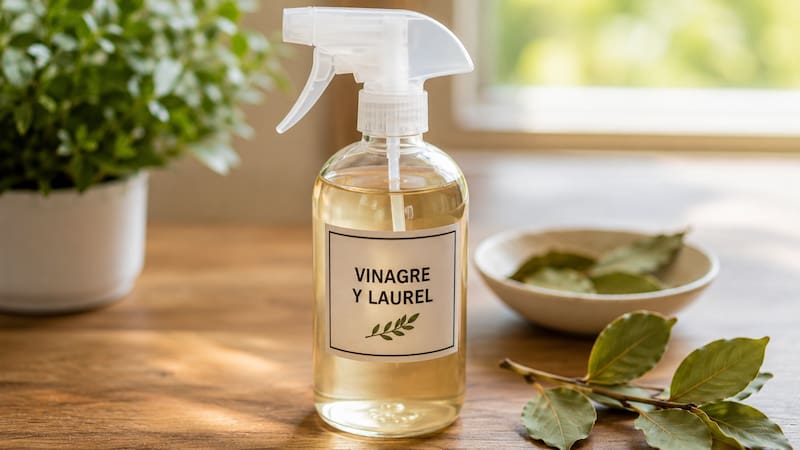
It should macerate for 7 to 14 days. After this time, the mixture should be strained, diluted with one part water, and poured into a spray bottle.
To use it, spray the mixture on the desired surface or dampen the cloth with the liquid, then dry with another clean cloth. If cleaning the refrigerator, it is recommended to wet the cloth first and empty the refrigerator.
Why mixing white vinegar and bay leaves is recommended
The recommendation takes into account the benefits of these two ingredients. White vinegar, for its part, helps remove traces of light limescale, soap residue, and bad odors.
On the other hand, bay leaves provide an herbal aroma that makes cleaning more pleasant and leaves a feeling of freshness. However, neither replaces a disinfectant when it comes to eliminating microorganisms,