
En esta noticia
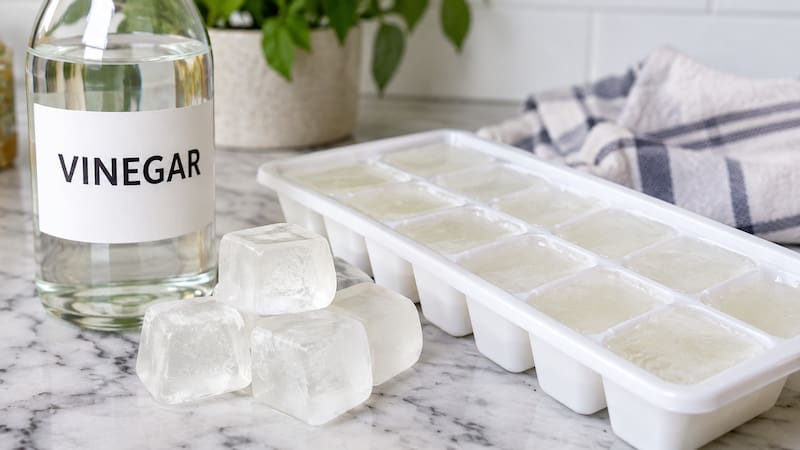
Freezing white vinegar in an ice cube tray is a homemade cleaning method that gained popularity for its practicality. The idea is to put the liquid in the freezer and use the cubes to treat areas with limescale buildup, mineral deposits or dirt.
The basis of this technique lies in the chemical properties of vinegar, which contains acetic acid diluted in water.
This compound can react with certain mineral deposits and help remove them as the ice cube melts.
What freezing white vinegar cubes is used for
The main use of the cubes is to make the product easier to apply directly. As it melts, the vinegar comes into contact with the surface and can act on some residue compatible with its acidity.
Possible uses include:
- Removing limescale deposits: acetic acid can react with calcium carbonate, one of the compounds found in the mineral buildup left by hard water.
- Making it easier to clean certain stains: on compatible surfaces, vinegar can help loosen some residue. Its effectiveness depends on the makeup of the stain.
- Applying the product to small areas: a cube makes it possible to dispense a limited amount of liquid in a specific spot, although it does not guarantee the product will stay in contact with the dirt longer.
- Helping reduce some odors: vinegar can alter or counteract certain compounds responsible for unpleasant smells, but it does not eliminate all odors or replace cleaning the source of the smell.
What happens when vinegar freezes: the physical and chemical explanation
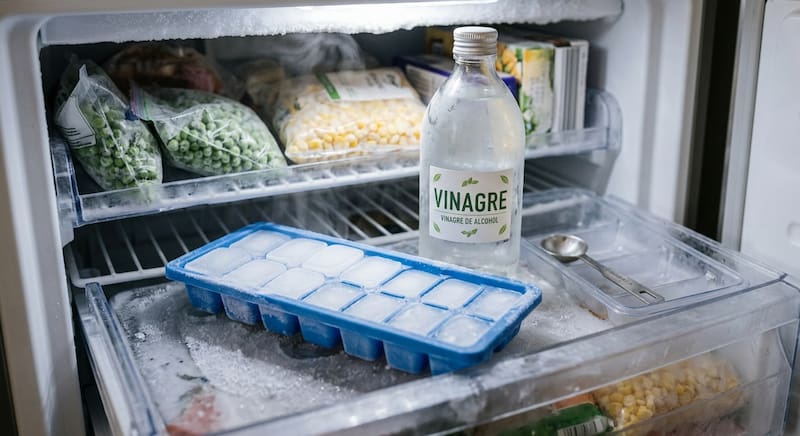
To understand why this method is used, it is necessary to separate two processes: the physical change in the liquid’s state and the chemical reaction that can occur when vinegar comes into contact with certain residues.
Acetic acid can react with limescale
One application with a chemical basis is the removal of certain calcium carbonate deposits. Acetic acid reacts with that mineral and produces calcium acetate, carbon dioxide and water.
The reaction can be represented as follows: CaCO₃ + 2 CH₃COOH → Ca(CH₃COO)₂ + CO₂ + H₂O
In simple terms, the acid helps transform part of the mineral deposit and makes it easier to remove afterward. The result depends on the vinegar concentration, the amount of limescale, the contact time and the characteristics of the surface.
The vinegar cube
The main difference from liquid vinegar is the way it is applied. As it melts, the cube releases the product onto a specific area.
How to make vinegar cubes for cleaning
- Use an ice cube tray reserved exclusively for cleaning.
- Pour in small amounts of white vinegar, without filling each compartment completely.
- Place the tray in the freezer and check whether the liquid solidifies.
- Apply the cube only to a surface compatible with acidic products.
- Remove residue with a cloth or soft sponge, rinse when appropriate and dry.
- Do not use the tray to make ice for consumption after using it with cleaning products.

Where vinegar should not be used
Vinegar’s acidity can damage certain materials, even when applied in small amounts. That is why it is not recommended to use it indiscriminately throughout the home.
The Natural Stone Institute warns that vinegar and other acidic products can dull or damage acid-sensitive natural stones, including those that contain calcium carbonate.
It is best to avoid it on:
- Marble, travertine and other acid-sensitive natural stones.
- Stone surfaces whose manufacturer advises against acidic cleaners.
- Unsealed wood and waxed surfaces, if the manufacturer does not authorize their use.
- Materials or finishes with specific cleaning instructions that prohibit vinegar.