Ants can quickly take over patios, garden paths and lawns during the warmer months, leading many homeowners to try natural remedies such as white vinegar. While vinegar may help disrupt ant trails, its effects are often temporary.
A growing number of gardeners are instead turning to food-grade diatomaceous earth, a natural powder that works differently by targeting the insects themselves rather than simply masking their scent trails.
Why Diatomaceous Earth Works Against Ants
Diatomaceous earth (DE) is made from the fossilized remains of microscopic aquatic organisms. Food-grade DE is considered a non-toxic option for household pest control when used as directed.

Fuente: Shutterstock
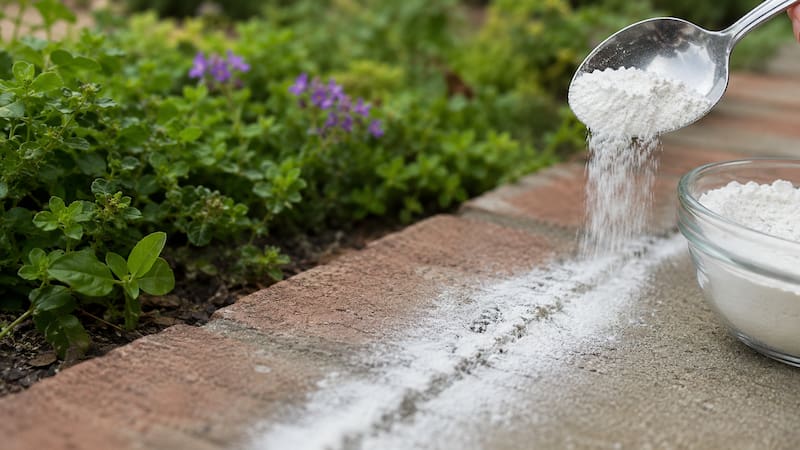
When ants come into contact with the fine powder, it damages their outer protective layer, causing them to lose moisture and eventually dehydrate. Because of this, many homeowners use it around patio cracks, walkways, and other areas where ant activity is common.
How to Use It in Your Yard
To apply food-grade diatomaceous earth, sprinkle a thin layer directly over ant trails, nest entrances, and cracks where insects are entering or leaving. The powder works best in dry conditions, so it should be reapplied after rain or watering.
Although white vinegar remains a popular natural remedy because it disrupts ants’ scent trails, diatomaceous earth may provide longer-lasting control by acting directly on the insects. Still, gardening experts note that no single method guarantees permanent results, and repeated applications or additional pest management strategies may be needed for large infestations.