
En esta noticia
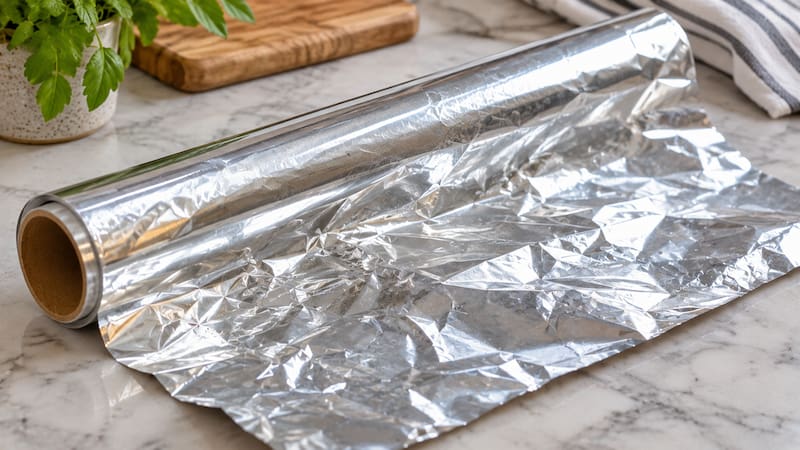
Aluminum foil is a staple in kitchens, used both to wrap food and to cover dishes and store leftovers. However, its physical and chemical properties make it unsuitable for storing all foods, especially those with certain levels of acidity or salt.
The interaction between aluminum and the components in some foods can trigger chemical reactions, damage the material, and encourage small amounts of metal to transfer to the food.
What foods should not be wrapped in aluminum foil?
The main concern is acidic foods, foods very high in salt, and foods with high moisture content. When these ingredients are combined, they can promote aluminum corrosion when there is direct, prolonged contact:
- Tomato-based dishes: sauces, lasagna, stews, and other tomato-based foods, because of their organic acid content.
- Citrus foods: chicken marinated with lemon, fish seasoned with lime, or slices of orange and lemon.
- Vinegar-based dishes: pickles, preserved vegetables, salads with vinaigrette, and marinated meats.
- Very salty, moist foods: meats in brine, poultry marinated in salt solutions, and deli meats left in contact with their own juices.
The risk rises when these foods remain in direct contact with the foil for several hours or days. That does not mean brief contact during preparation or cooking is forbidden.
What can happen if these foods are stored in aluminum foil?
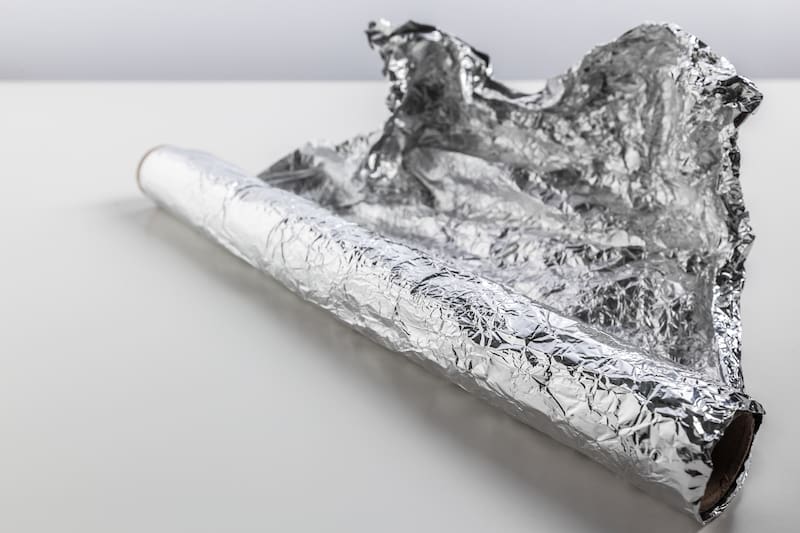
Aluminum naturally develops a surface layer of aluminum oxide that acts as a protective barrier. However, that protection can break down when it comes into contact with certain chemical components in food.
Acids can dissolve part of that oxide layer, while chlorides in salt can damage the protection at certain points. When the metal is exposed, it can partially dissolve in the moisture in the food, and aluminum can transfer to the food.
Visible signs include dark spots, small holes in the foil, and gray residue on the food. The flavor can also change and take on a metallic taste.
How is it recommended to store them?
To avoid the chemical reaction between aluminum and the components of food, it is recommended to use containers made of materials that do not react with acids or salts, such as:
- Glass containers: a good option for storing tomato sauces, pickles, marinated foods and citrus-based dishes.
- Food-safe plastic containers: they let you store leftovers and moist dishes without direct contact with aluminum.
- Stainless steel containers: another alternative for storing acidic or salty foods.
If you need to cover a dish with aluminum foil, it is important to keep it from touching the food directly. You can also place a sheet of parchment paper between the food and the foil.
What foods can be stored in aluminum foil?
Aluminum foil can be used to wrap foods that do not contain a high concentration of acids or salts and do not create conditions that encourage the metal to dissolve, such as:
- Bread and baked goods: they can be wrapped to protect them from air exposure for short periods.
- Sandwiches: as long as they do not have very moist, acidic or salty ingredients in prolonged contact with the foil.
- Roasted meats: they can be covered while resting to keep them warm, avoiding contact between the foil and acidic or salty marinades.
- Baked dishes: the foil can be used to cover dishes during cooking or to protect certain parts of the food from direct heat.