En esta noticia
Vinegar has become one of the most widely used products for house cleaning thanks to its ability to remove grease, dirt, and bad odors.
However, many people do not know that there are different varieties and that not all offer the same performance.
What is the difference between cleaning vinegar and white vinegar?
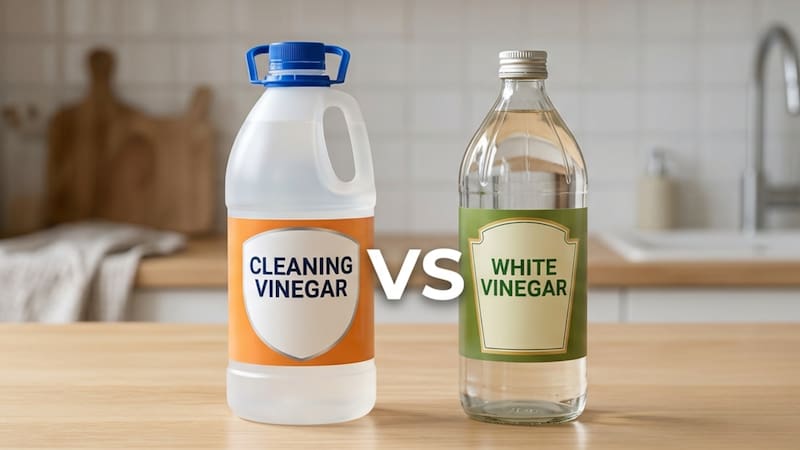
Although both contain acetic acid, the main difference lies in their concentration.
The white vinegar intended for consumption usually contains between 4% and 6% acetic acid, while cleaning vinegar reaches concentrations close to 8% or even higher, which increases its ability to remove grease, soap residue, limescale, and stubborn dirt.
Which do experts recommend for cleaning the home?
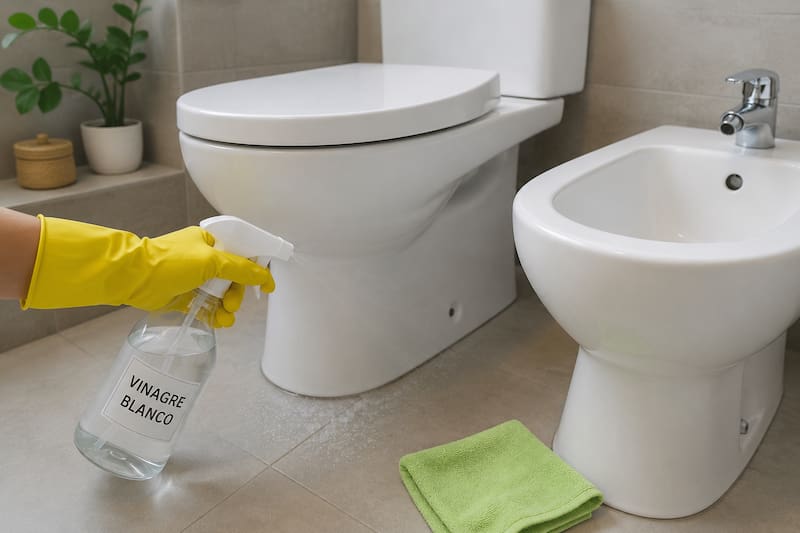
Cleaning specialists agree that cleaning vinegar is more effective when it comes to sanitizing household surfaces.
Its higher concentration allows for better results in tasks such as:
- Removing grease from kitchens and stovetops.
- Cleaning tiles and grout.
- Removing limescale residue.
- Removing soap stains from showers and screens.
- Neutralizing bad odors.
- Cleaning durable floors and washable surfaces.
For that reason, it often becomes the recommended option for those seeking a deeper clean.
When is it better to use white vinegar?
White kitchen vinegar remains an excellent alternative for light cleaning and for those who prefer to use less concentrated products.
It can be used to:
- Clean glass and mirrors.
- Deodorize rooms.
- Remove odors from containers.
- Sanitize some everyday surfaces.
- Prepare homemade cleaning mixtures.
Its lower concentration makes it enough for many common household tasks.

What precautions should be taken when using cleaning vinegar
Although it is a household product, experts recommend using it correctly.
Among the main recommendations are:
- Do not ingest it, since it is not intended for consumption.
- Avoid mixing it with bleach (chlorine) or other chemicals.
- Use gloves when using it for extended periods.
- Keep it out of reach of children and pets.
- Always read the manufacturer’s instructions before applying it to delicate surfaces.
Is it worth replacing white vinegar?
If the goal is to do a deep clean, remove built-up grease, or fight limescale, specialists consider that cleaning vinegar offers superior performance thanks to its higher concentration of acetic acid.
However, for everyday tasks or gentle cleaning, white vinegar remains a practical, economical alternative that is widely used in thousands of homes.
The choice will depend on the type of surface and the level of dirt that needs to be removed.