
By Pedro Bianco
En esta noticia
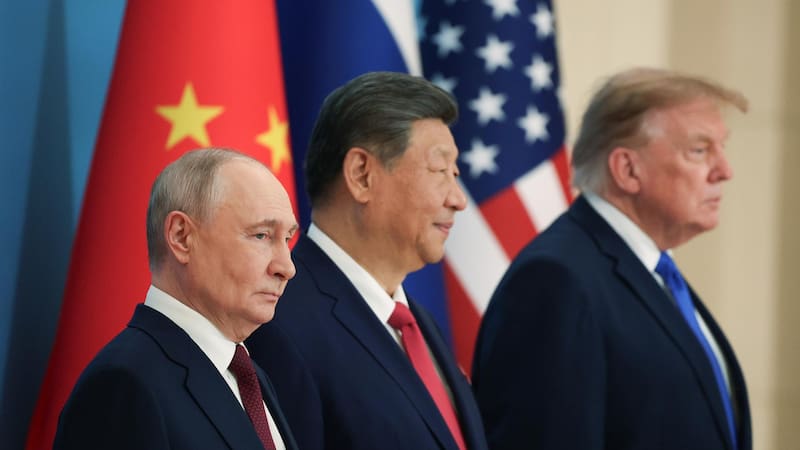
Russia and China have pushed the dollar almost entirely out of their trade. The Russian government itself confirmed it: the vast majority of transactions between the two countries are now settled in their own currencies, the ruble and the yuan, rather than the U.S. currency. It is one of the clearest examples of the global trend toward de-dollarization.

Russia and China have practically stopped using the dollar
The figure was provided by Russian Prime Minister Mikhail Mishustin during a meeting in St. Petersburg with Chinese Premier Li Qiang in October 2026. There, Mishustin said that “the share of national currencies in bilateral trade is already close to 100%.” In other words, virtually all trade between the two countries is now carried out in rubles and yuan.
In the same remarks, he noted that bilateral trade has increased more than 30-fold over the past 25 years, a sign of the strong growth in economic ties between the two powers.
What it means for the dollar
If nearly 100% of trade between Russia and China is conducted in national currencies, that means the dollar has been pushed virtually out of that exchange. What for decades was the default intermediary currency in global trade, including between these countries, has in practice become almost irrelevant for transactions between Moscow and Beijing.
The backdrop: de-dollarization and the BRICS
The Russia-China case is the spearhead of a broader trend known as de-dollarization: a group of countries, especially the BRICS, that are seeking to trade more and more in local currencies to rely less on the dollar and on the U.S. financial system.
For those countries, reducing exposure to the dollar is also a way to shield themselves from sanctions and gain autonomy. Among all the examples, Russia and China, because of their scale and how far the process has advanced, is the one most often cited.