
En esta noticia
Washing fruits and vegetables before eating them is a common practice to remove dirt and reduce certain residues. However, when it comes to removing pesticides, using water alone may not be the most effective option.
A review published in the scientific journal Frontiers in Environmental Health on April 30, 2026, analyzed 47 peer-reviewed studies comparing different methods of washing fresh produce. Researchers evaluated 23 types of fruits and vegetables and 79 pesticides or their metabolites.
The findings indicate that soaking produce in baking soda or vinegar solutions was associated with a higher median reduction in pesticide residues than methods using water alone.

What baking soda and vinegar do when washing fruits and vegetables
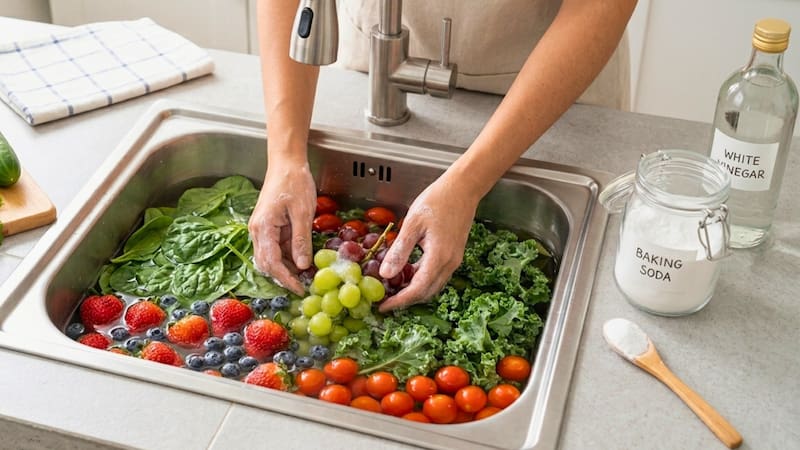
The study compared four methods: rinsing produce under running water, soaking it in plain water, soaking it in a baking soda solution, and using a vinegar or acetic acid solution.
Researchers calculated the median reductions in pesticide residues reported across the studies. The results were as follows:
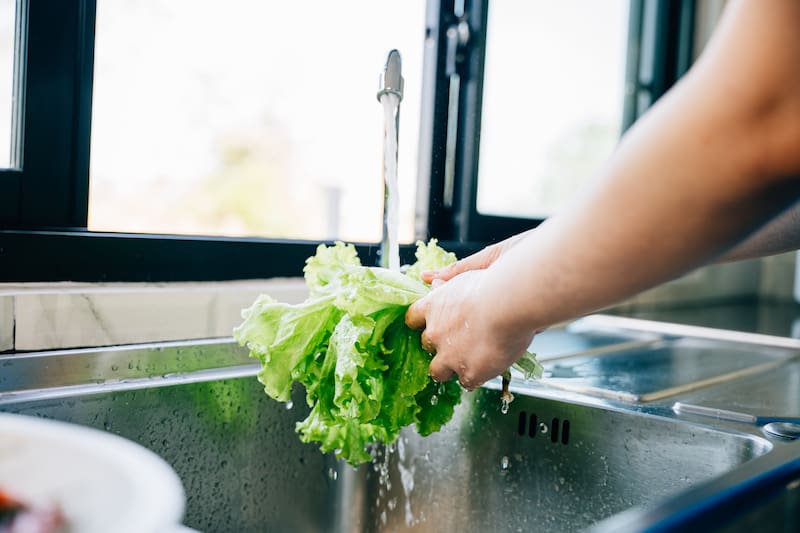
- Rinsing under running water: 30.2% median reduction.
- Soaking in water: 33.7% median reduction.
- Soaking in a baking soda solution: 50.9% median reduction.
- Soaking in a vinegar or acetic acid solution: 54.2% median reduction.
The review found that baking soda and vinegar showed an advantage of more than 15 percentage points in median pesticide residue reduction compared with methods using water alone.
How baking soda and vinegar act on pesticides chemically
The difference between baking soda, vinegar and water is partly related to their chemical composition and pH levels. While tap water is generally close to neutral, baking soda creates a mildly alkaline solution, and vinegar contains acetic acid, which makes the mixture acidic.
These conditions can affect the stability of certain pesticides. Some molecules are sensitive to acidic or alkaline environments and may undergo chemical reactions that alter their structure. This process, known as chemical degradation, can contribute to reducing the amount of the original compound remaining on the surface of the food.

In a baking soda solution, the alkaline environment may promote the degradation of certain pesticides that are susceptible to this type of reaction. Vinegar, in contrast, creates an acidic environment that may affect other substances sensitive to lower pH levels. This is why neither ingredient works the same way on every chemical used in agriculture.
A more straightforward process may also play a role: soaking allows some residues to loosen from the surface and move into the surrounding liquid. How much is removed depends on the pesticide’s properties, how long it has been in contact with the food, and the characteristics of the fruit or vegetable’s skin or surface.