

En esta noticia
While fireworks light up the sky of the United States on the night of July 4, another phenomenon shines even more brightly on the horizon: Venus.
The planet becomes the “Evening Star” and can be seen with the naked eye as soon as the sun sets, without the need for a telescope or special equipment.
Venus is approaching its maximum eastern elongation, the point at which it is farthest from the Sun as seen from Earth. That explains why it remains visible for nearly two hours after sunset and stands as the brightest object in the night sky in July.

Why does Venus stand out in the sky on July 4?
Venus shines at a magnitude of approximately -4, a level of brightness that surpasses that of any star. Unlike stars, the planet does not twinkle: its light is steady and compact, which makes it easy to identify even from urban areas with light pollution.
The phenomenon lasts throughout July, but on July 8 and 9 it appears next to Regulus, the brightest star in the constellation Leo, which serves as a visual reference to locate it more precisely.
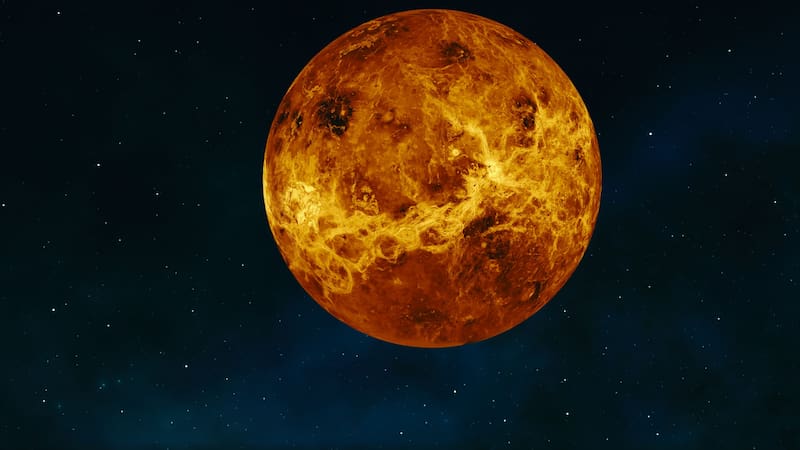
To recognize it in the sky, there are some key signs:
- A very bright white point, low on the western horizon
- Visible for up to two hours after sunset
- Steady brightness, without flickering, unlike stars
- With binoculars or a small telescope, its crescent shape can be distinguished

From which states will this phenomenon be visible?
Venus is not a regional phenomenon: it can be observed from any state in the country, as long as the western horizon is clear of buildings, mountains, or tall trees. No need to travel to a specific area to see it.
The main condition for good observation is to move away from the artificial lights of cities. Just look west between 30 and 60 minutes after sunset on July 4 to clearly distinguish it, even amid the celebrations.