

En esta noticia
Form W-9 is one of the most common documents for self-employed workers in the United States, such as freelancers, contractors, and vendors. It is a simple procedure, but it is worth knowing in detail what it is, who must complete it, what is is used for, and the information it includes.


What is Form W-9
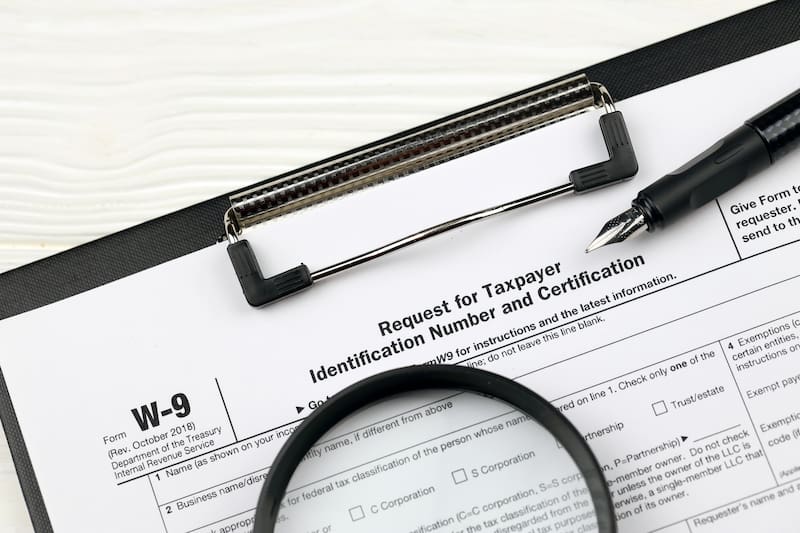
Form W-9 (its official name is Request for Taxpayer Identification Number and Certification) is an Internal Revenue Service (IRS) document used so that a person or business can give their tax information to the person who pays them.
The W-9 is not sent to the IRS. It is completed and given to the company or person who will make the respective tax payments, who keeps it in their records and uses it to report those payments to the tax authorities.
Who must complete it
In general, it is completed by whoever receives payment without being an employee. The most common cases are:
- Independent workers and freelancers
- Contractors who provide services to a company
- Vendors of goods or services
- People who receive certain income such as interest, dividends, or rent
What it is used for
The W-9 has a specific purpose: to allow the payer to report those payments to the IRS, generally through a Form 1099 at the end of the year. With the W-9 data, the company knows in whose name and with which tax identification number it must report what it paid you.
For that reason, the W-9 is usually the step before the 1099: first you provide your data with the W-9 and, later, you receive the 1099 that summarizes what was paid.
What information the W-9 includes
The form is brief and basically asks for:
- Name and, if applicable, the business name
- The tax classification (for example, individual/self-employed worker, partnership, etc.)
- The address
- The taxpayer identification number (TIN), which can be the Social Security number (SSN) or the employer identification number (EIN)
- A signed certification that the information is correct
Attention: be careful who you give your personal information to
Because the W-9 contains sensitive information (including the tax identification number), it is best to give it only to someone who has a legitimate reason to request it: a real client, a company you are going to work with. If the request is suspicious or comes from strangers, it is advisable to verify before sharing that data.