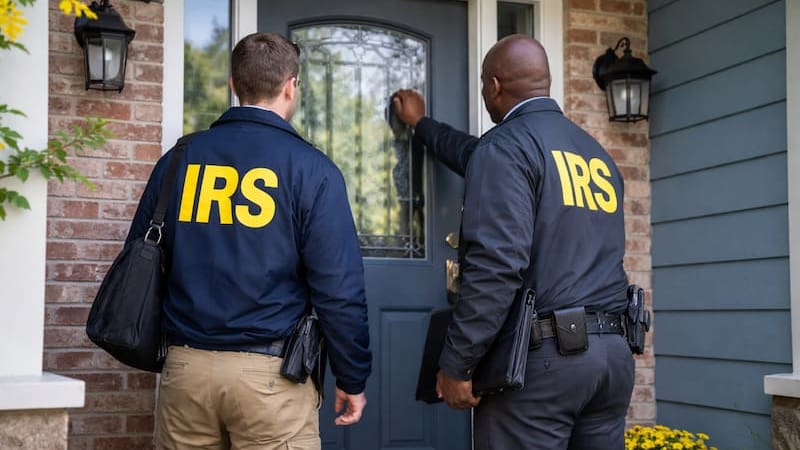

The United States Government has confirmed that the Internal Revenue Service (IRS) may make home visits to taxpayers who have kept tax debts unresolved for extended periods.
These inspections are part of the forced collection process and are triggered when an individual has not filed returns, has ignored official notices, or has failed to meet payment commitments.

IRS will make home visits to all these people
The IRS can proceed with in-person visits by its agents in the following circumstances:
- The debt has remained unpaid for months or even years.
- The taxpayer has not responded to official notices.
- There have been missed or defaulted installment payment plans.
- There are signs that income or assets may have been concealed.
- A direct verification of the taxpayer’s financial information is required.
If the taxpayer persists in inaction after the visit, the IRS has the authority to seize bank accounts, wages, and property.
Are the visits generated automatically?
The IRS does not send agents to homes as a first step. Before proceeding with an in-person visit, the following process is generally carried out:
- Letters and notices by mail informing about the debt or the failure to file returns.
- Final notifications about the intention to collect or seizure.
- Opportunity to pay, appeal, or negotiate.
Only if the taxpayer does not respond for an extended period can the case be assigned to a tax officer, who is responsible for carrying out a home visit.