
En esta noticia
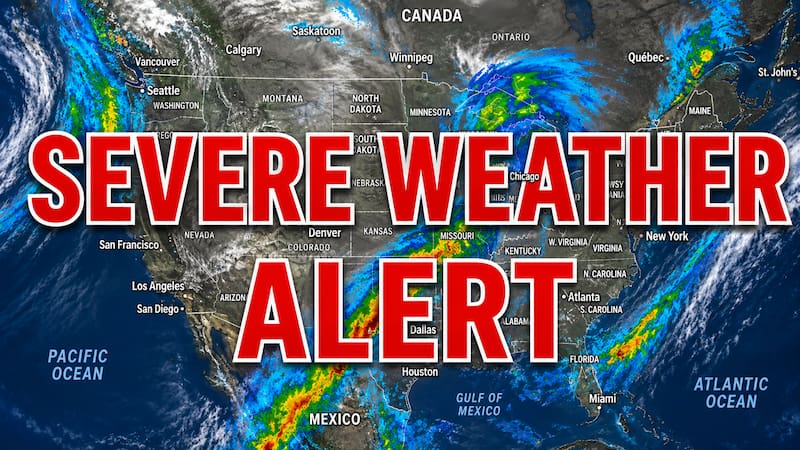
September arrives and several states remain under the threat of intense precipitation . The first week will be marked by a succession of strong storms and continuous rain across much of the United States.
The area of greatest instability will stretch from North Dakota to parts of the Midwest and Northeast, with episodes that could generate flash flooding, damaging wind gusts, and hail.

The weather for the first week of September: storms, rain and possible hail
Starting on Wednesday, September 2, the more severe storms will stretch from the southern Lower Peninsula of Michigan and southern Ontario to Delaware and New Jersey. The cities that could be most affected are Detroit, Cleveland, Toronto, Pittsburgh, Philadelphia and Baltimore. Western and central New York, along with northern Pennsylvania, will also be at risk.
By Thursday, September 3, precipitation will move southward, from central Ohio to Virginia and New Jersey. Cleveland, Columbus, Philadelphia, Harrisburg, Washington DC, Richmond and Baltimore will be the most exposed cities.
By the weekend, the pattern of storms will remain active over parts of the Midwest and Northeast, with new rounds of storms and torrential rain. Some storms could again reach severe intensity before the weekend, when the area of greatest instability begins to shift farther south.
Warnings for risk areas: What precautions should be taken because of this precipitation?
The National Weather Service (NWS) recommends staying alert to local warnings. Specialists at Accuweather warn that repeated precipitation over areas that have already received abundant water during Wednesday and Thursday could increase the risk of flash flooding, especially on streets, small streams and areas with poor drainage.
The main recommendations are:
- Seek shelter inside a sturdy building when a severe storm approaches and avoid staying in flimsy structures or under trees.
- Stay away from doors and windows, especially when there is a risk of strong winds or hail.
- Do not cross flooded streets or roads, whether on foot or by vehicle, due to the danger posed by moving water.
- Follow local weather alerts and the instructions of authorities to know about changes in the path or intensity of storms.
- Secure objects that could become loose in yards or on balconies, as gusts can turn them into dangerous items.