En esta noticia
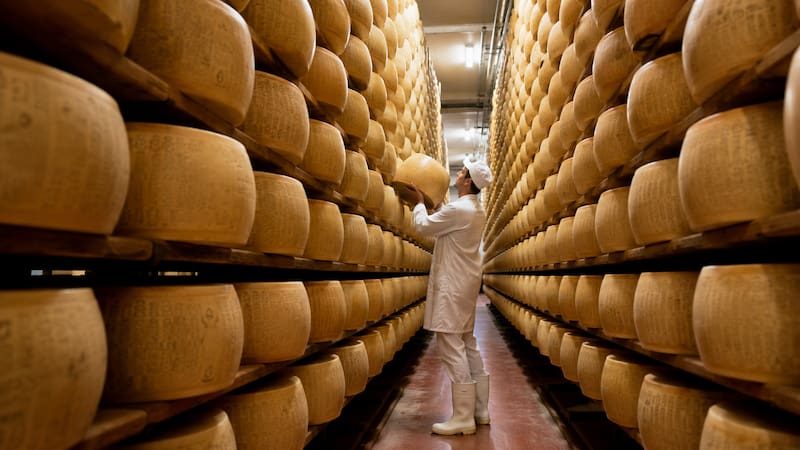
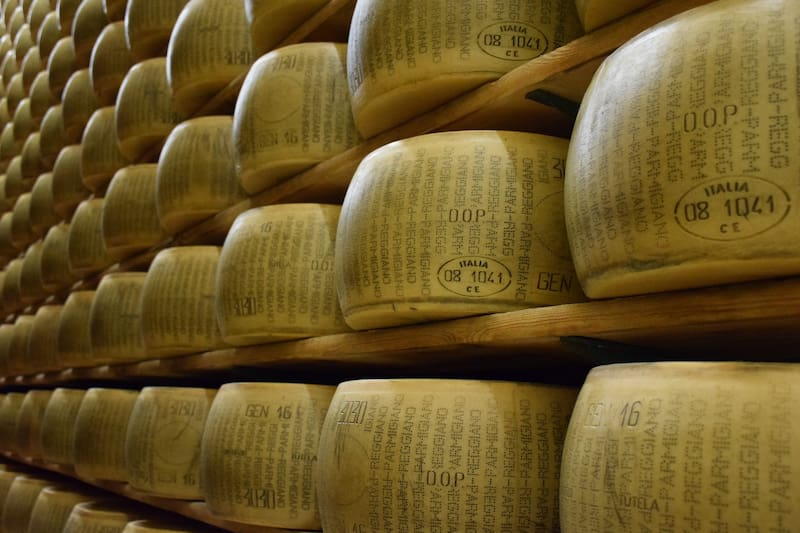
The heat wave that has been sweeping across Europe for weeks has put the cheese bank system in Italy on the ropes. More than half a million wheels of Parmigiano-Reggiano, valued at about 300 million euros, were exposed to record temperatures inside the underground vaults of Credito Emiliano Bank (Credem).
In response to the risk, the institution had to urgently reinforce its cooling systems. The goal is to prevent the heat from damaging the product that backs thousands of loans to Italian dairy producers.
Credem has accepted Parmigiano-Reggiano wheels as loan collateral since the 1950s. The mechanism allows family producers to obtain income while the cheese matures, a process that can take up to 36 months.
Giancarlo Ravanetti, head of one of Italy’s cheese storage facilities, confirmed that energy consumption in the vaults rose by nearly 30% during July. That month marked the peak of the heat wave in the region.
Why does the heat put cheese stored in Italian banks at risk?
Parmigiano-Reggiano is stored in underground chambers where temperature and humidity must remain stable for years. The record temperatures in July in Emilia-Romagna forced Credem to demand greater effort from its cooling systems.
The bank now stores more than 500,000 wheels in its Reggio Emilia and Modena facilities, out of a total of about 4 million produced by the country each year. Each wheel can represent between 60% and 80% of its value, which the producer receives in advance.
To protect the cheese from extreme weather, the institution implemented several technical measures:
- Upgrading the cooling systems
- Expanding the thermal insulation of the storage facilities
- Increasing its own renewable energy generation
- Adding wheels as collateral even before they enter the vaults
How does this crisis affect producers and cheese prices?
The heat wave also reduced milk production, a key input for making Parmigiano-Reggiano. According to the Parmigiano Reggiano Consortium, cows eat and produce less in high temperatures.
That phenomenon can cut milk yield by up to 10% a year. The decline directly affects the availability of raw materials to produce new wheels.
The Parmigiano-Reggiano industry brings together some 300 certified dairies and is valued at more than US$ 5.15 billion. It therefore faces a two-front challenge: the energy cost of protecting stock and lower milk production.
Industry specialists anticipate that, if heat peaks are repeated, production and storage costs will continue rising in the coming months.