
En esta noticia
The correct way to place the toilet paper has once again become a topic of conversation in homes and on social media, and although many believe it is just a matter of habit, home hygiene specialists maintain that there is a more advisable position. The debate over putting the paper forward or backward even has a historical precedent that often tips the balance toward just one option.
Beyond personal preferences, the orientation of the roll can influence ease of use, bathroom cleanliness, and the contact of hands with potentially contaminated surfaces. That is why more and more experts suggest adopting only one way of placing it.

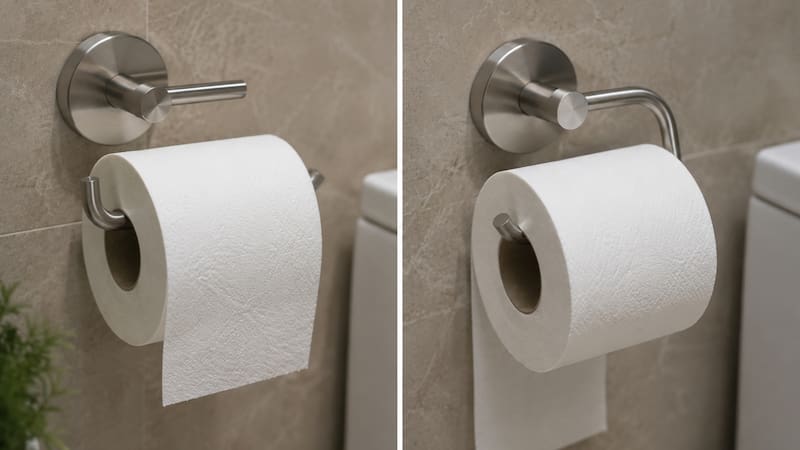
The proper way to place toilet paper in the bathroom
The most widely recommended option is to place the toilet paper facing forward, that is, with the end of the roll hanging from the outside and visible side. This is the position shown in the original patent for perforated toilet paper registered by Seth Wheeler in 1891, where the end is shown facing forward.
Although a patent does not function as a household law, it does show what design its inventor originally intended.
Why it is recommended
Experts usually mention several practical advantages:
- The end is found faster.
- It can be torn off more easily with one hand.
- Finger contact with the wall or holder is reduced.
- The roll looks neater and cleaner.
- It makes replacement easier when the roll is changed.
In shared bathrooms, these small differences can improve the daily experience and help maintain better hygiene.
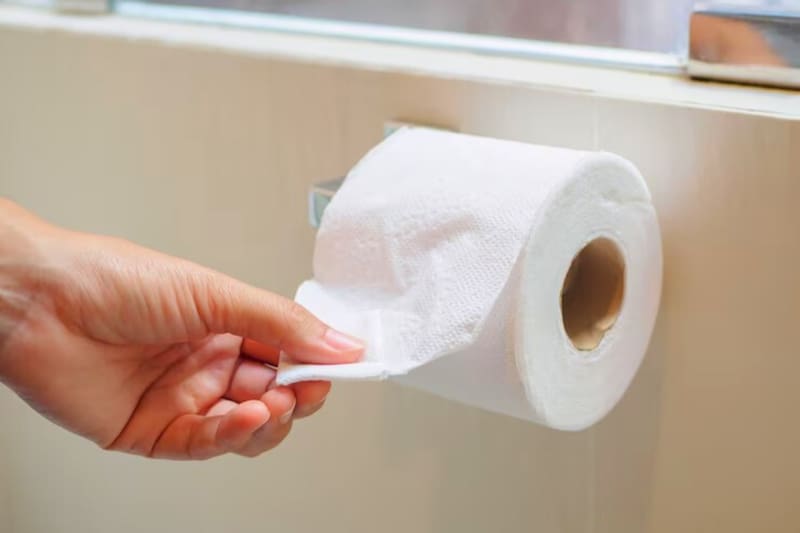
What happens if the toilet paper is placed backward?
When the end is stuck to the wall, many people have to touch the roll more to find the end. That increases contact with a surface that can accumulate moisture, dust, or microorganisms.
However, there is a common exception: in homes with small pets or children, some people prefer to place the paper backward to make it harder for them to unroll it while playing.

How to place toilet paper: does it affect bathroom hygiene?
It does not by itself determine bathroom cleanliness, but it can affect hand contact with the roll. Less handling means fewer chances of transferring dirt or bacteria.
That is why the forward-facing recommendation is more about a better everyday hygiene practice than about a mandatory rule.