
En esta noticia
The United States Navy is moving forward in defining its next sixth-generation carrier-based fighter, a key project that will shape naval air power over the coming decades.
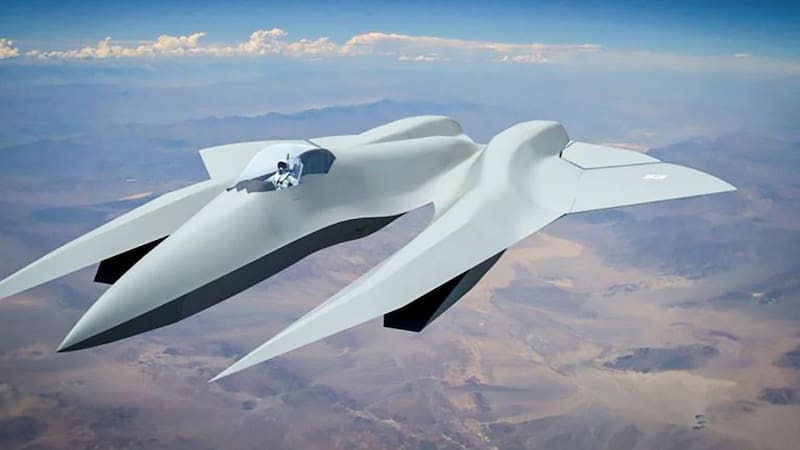
In that process of conceptual exploration, a proposal emerged that drew attention for its boldness: the SM-39 Razor, an aircraft with a silhouette that recalls a bat and performance promises that push the limits of current engineering.
This concept is linked to the F/A-XX program, intended to replace the current F/A-18 Super Hornet and operate from aircraft carriers in increasingly contested scenarios.
Unlike the Air Force, the Navy is seeking an aircraft designed specifically for short takeoffs, arrested landings, and high structural endurance, which opens the door to unconventional designs.

The fighter that promises to fly at hypersonic speeds
The SM-39 Razor, proposed by the firm Stavatti Aerospace, introduces a radical architecture based on an integrated wing-body scheme and multiple fuselage sections. According to its projections, the aircraft would be stealthy, twin-engined, and capable of maintaining supercruise at speeds far above those of current fighters, with estimates reaching up to Mach 4.
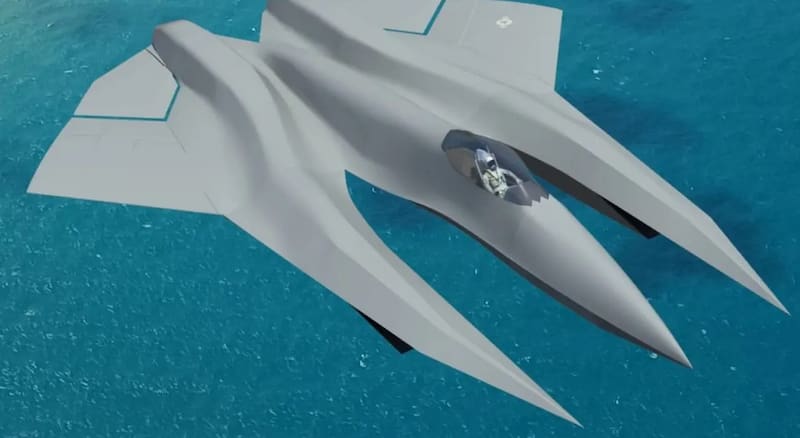
These figures would place it far above current naval aviation standards. However, experts in military aeronautics warn that achieving those speeds with turbofan engines would involve extreme challenges in thermal management, airflow, and infrared signature, critical factors for an aircraft that must preserve stealth in combat.
The appeal of the design is not only about speed: the concept points to a fighter with long range, a large internal payload, and the ability to operate as a multirole platform in air superiority, strike, and electronic warfare missions.
From concept to carrier: doubts, skepticism, and industrial reality
Despite its visual and conceptual impact, the “bat-wing” fighter generates marked skepticism within the specialized community. Stavatti Aerospace has a long history of conceptual designs, but it has not built operational prototypes, a key factor in a program as demanding as F/A-XX.
In addition, the U.S. Navy has not officially confirmed that the SM-39 has been presented as a formal proposal within the program, reinforcing the idea that it is, for now, a futuristic vision rather than a project in an advanced stage.

In an environment where giants such as Boeing and Northrop Grumman concentrate the experience and resources, the SM-39 Razor represents the most speculative side of the debate over the future of naval air combat: a demonstration of how far imagination can go before confronting the limits of physics and industrial reality.