
En esta noticia
About 150 million years ago, the area that is now Spain was home to a dinosaur that, until now, scientists had identified only in North America. It was a diplodocus, one of the Jurassic’s great plant-eaters, known for its long neck, enormous size, and distinctive tail.

The discovery was made at the La Tejería site in El Castellar, in Teruel province. There, a team of paleontologists from the Teruel-Dinopolis Paleontological Foundation identified 14 tail vertebrae and several additional bones that allowed them to assign the remains to this dinosaur genus.
The study, published Sept. 14, 2026, in the scientific journal Journal of Vertebrate Paleontology, is the first recognized evidence of a diplodocus outside North America. The find also sheds light on the connections that existed between Europe and America during the Late Jurassic.
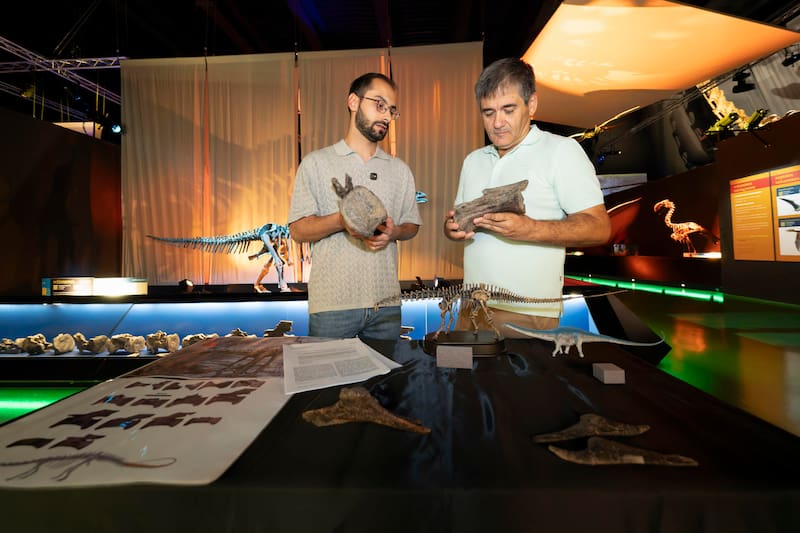
Remains of 150 Million-Year-Old Dinosaur Found in Teruel
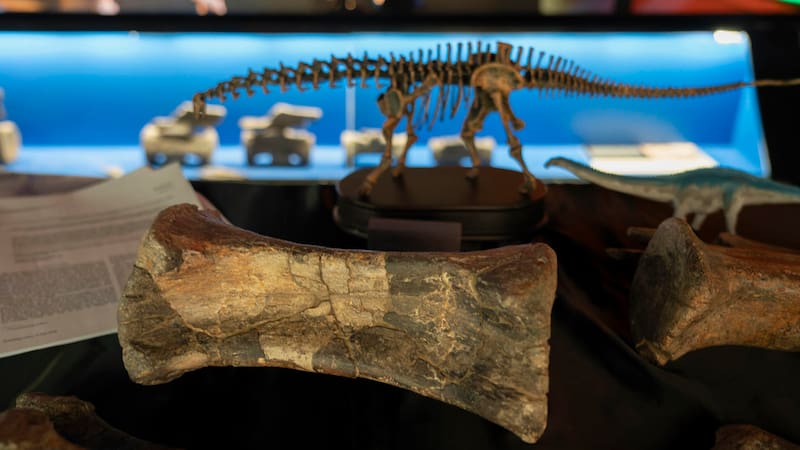
The fossils were recovered at La Tejería, a site in the Teruel municipality of El Castellar. The researchers identified 14 vertebrae from the middle and rear portions of the tail, as well as several bones known as chevrons, which attach to the lower part of the vertebrae.
The analysis identified anatomical features typical of the Diplodocus genus, including large air-filled cavities in the vertebrae, elongated vertebral centra, and split chevrons. Those traits, along with comparisons with other fossils and evolutionary analyses, led the team to classify the specimen as Diplodocus sp.
The study was carried out by Sergio Sánchez Fenollosa, Josué García Cobeña, and Alberto Cobos, researchers at the Dinopolis Foundation. According to their conclusions, the specimen is among the most complete diplodocid remains found in Europe, although the bones recovered do not allow for a specific species to be determined.
What the Diplodocus Was Like, the Giant Dinosaur That Also Lived in Spain
Diplodocus was one of the most representative herbivorous dinosaurs of the Late Jurassic. It belonged to the sauropod group, animals characterized by bulky bodies, four sturdy legs, very long necks and relatively small heads.
These dinosaurs could reach about 25 meters in length, a size that made them some of the largest land animals of their time. Their extremely long tail, which tapered toward the end, was one of their most recognizable features.
Until this discovery, fossils attributed to the Diplodocus genus came from the Morrison Formation, a vast geologic unit in the western United States. The identification of remains in Teruel expands its known range and shows, according to the study’s authors, that these animals also lived in Europe.
Why the Teruel Discovery Changes What Was Known About Dinosaurs
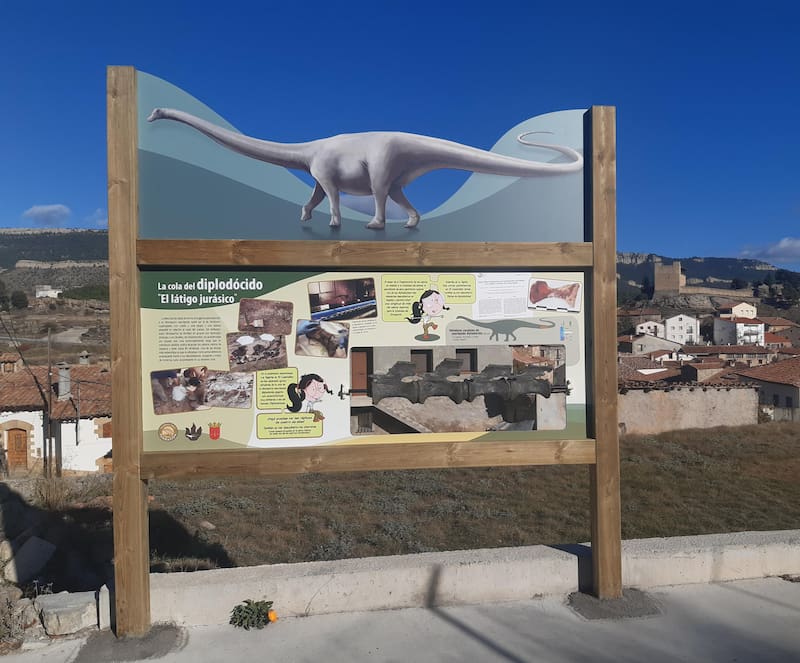
The remains provide evidence that Europe and North America shared certain dinosaur groups about 150 million years ago, when the Atlantic Ocean was still in an early stage of formation.
According to the researchers, during the Late Jurassic there may have been episodes of dispersal and faunal exchange between the two regions. These connections would have allowed certain animals to move between territories that are now separated by thousands of miles of ocean.
The study bolsters that hypothesis, although some specialists believe a precise identification of the genus requires more evidence. José Ignacio Canudo, a paleontology professor at the University of Zaragoza, described the research as an important contribution but said the tail remains may not be enough to attribute them to Diplodocus with absolute certainty.
For their part, the authors maintain that the anatomical features and phylogenetic analyses support that identification. The original fossils are on display at the Aragonese Museum of Paleontology in Dinopolis, where they offer insight into one of the most important discoveries about the presence of large sauropods on the Iberian Peninsula.