
En esta noticia
In August, one of the most striking astronomical phenomena of all will take place when the full Moon passes through the Earth’s shadow and gives rise to a partial lunar eclipse.
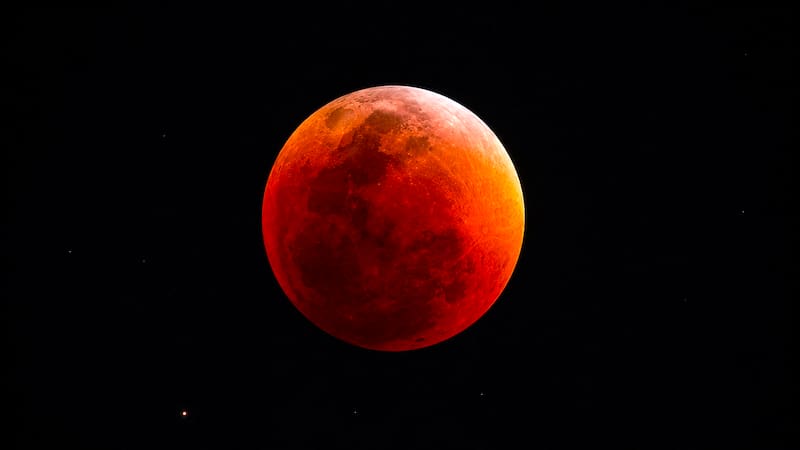
According to what was stated by NASA, the event will take place during the night of August 27 and will extend into August 28 in certain time zones with a distinctive feature: at the peak of the eclipse, almost the entire Moon falls within the darkest part of Earth’s shadow.
Where this August lunar eclipse can be seen
The phenomenon can be observed in much of North America and South America, as well as some regions of Africa and Europe.
Although the Moon will not disappear completely from view, its appearance will change, and the area covered by the shadow may take on a dark tone with a coppery or reddish color.
What the August lunar eclipse will be like
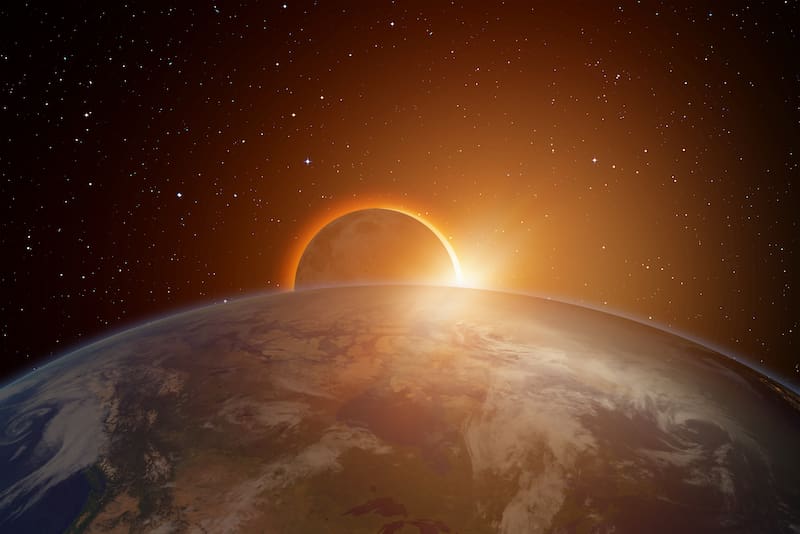
During a lunar eclipse, the Moon passes through the shadow cast by the Earth. In this case, because it is a partial eclipse, a small part of the satellite will remain outside the darkest shadow.
Facts to remember about this lunar eclipse
- Approximately 93% of the Moon’s diameter will be inside Earth’s umbra
- The eclipsed portion may take on a dark, coppery appearance
- It will occur mainly during the night of August 27
An eclipse that everyone will be able to observe from their homes
Experts note that, unlike a solar eclipse, a lunar eclipse can be observed directly without any special eye protection, so those who are in any of the areas mentioned above will be able to enjoy it.
Those who want to take the observation to another level can use binoculars or a telescope.