
En esta noticia
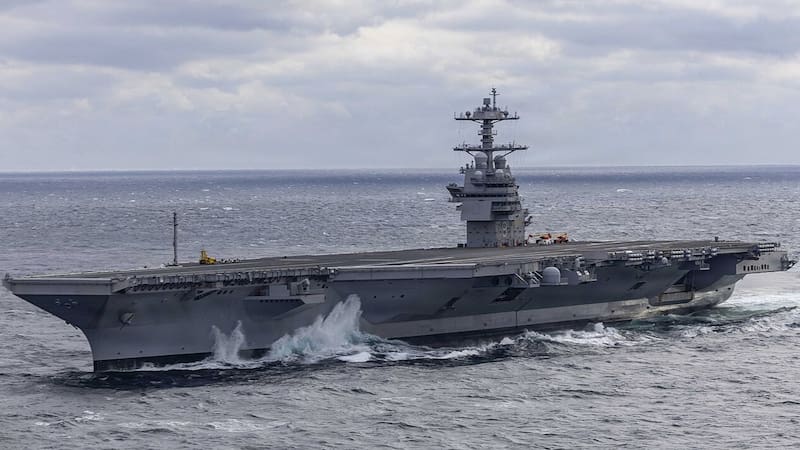
The U.S. Navy, one of the branches of the country’s armed forces, is moving ahead with the addition of a new nuclear aircraft carrier that will displace 100,000 tons, have two reactors and be able to carry about 75 aircraft. It is the USS John F. Kennedy (CVN-79), the second ship in the Gerald R. Ford class, designed to operate for 50 years.
The ship will incorporate advanced technology for launching and recovering aircraft, as well as modernized electrical and navigation systems.
The project already passed an important review stage in September 2026, when the U.S. Navy announced its preliminary acceptance and confirmed the ship was close to completing construction, with formal delivery planned for spring 2027.

What the 100,000-ton nuclear aircraft carrier the U.S. will add is like
The USS John F. Kennedy (CVN-79) will be the second aircraft carrier in the U.S. Navy’s Gerald R. Ford class. It is a nuclear-powered ship designed to function as a mobile air base, with the ability to deploy aircraft and support different military missions at sea.
According to official U.S. Navy information, its main features are:
- Displacement: 100,000 tons.
- Length: 333 meters.
- Propulsion: two nuclear reactors.
- Speed: more than 30 knots.
- Expected service life: about 50 years.
The design also incorporates new power-generation technologies, navigation, weapons handling and flight operations, aimed at improving performance compared with earlier-generation aircraft carriers.

It has two nuclear reactors and can carry more than 75 aircraft: how its military capability works
The USS John F. Kennedy (CVN-79) will be able to carry 75 aircraft, including fighter jets, surveillance aircraft and helicopters. Its air wing could include models such as the F-35C Lightning II, F/A- 18E/F Super Hornet, EA-18G Growler, E-2D Advanced Hawkeye and MH-60 Seahawk, intended for strike, electronic warfare, reconnaissance and naval support missions.
To operate these aircraft, the ship will have an electromagnetic aircraft launch system (EMALS), which replaces traditional steam catapults and allows planes to be launched from the deck. In turn, two nuclear reactors will provide the power needed for propulsion and for the aircraft carrier’s electrical systems.

Why it is designed to operate for 50 years and when it will join the Navy
The aircraft carrier was designed for a 50-year service life, a feature of ships in the Nimitz and Gerald R. Ford classes. Its two nuclear reactors allow it to generate power for long periods without relying on conventional fuel to move. However, during that period it will require inspections, repairs and a midlife nuclear refueling.
As for its entry into service, the process reached an advanced stage on Sept. 29, 2026, when the U.S. Navy announced its preliminary acceptance after it completed acceptance trials in August. Formal delivery is scheduled for spring 2027, while evaluations of its systems continue, including the four weapons elevators that still need testing.