
En esta noticia
Years before MKUltra, the CIA tested interrogation techniques on Korean War prisoners under a secret mind-control program called Project Bluebird. Declassified records show its planners also asked whether a subject could be made to crash a plane.
The records are among more than 1,200 CIA documents published in December 2024 by the National Security Archive, a nonprofit research group at George Washington University, together with the academic publisher ProQuest.
Bluebird began in 1950, just months before the Korean War broke out. The agency renamed it Artichoke in 1951. That work fed into MKUltra, the drug and behavior-control program the CIA launched in 1953.
What did the CIA do to Korean War prisoners under Project Bluebird?
A memo dated April 5, 1950, asked then-CIA Director Roscoe Hillenkoetter to approve three-person interrogation teams. Each team would pair a psychiatrist with a polygraph operator trained in hypnosis and a technician.
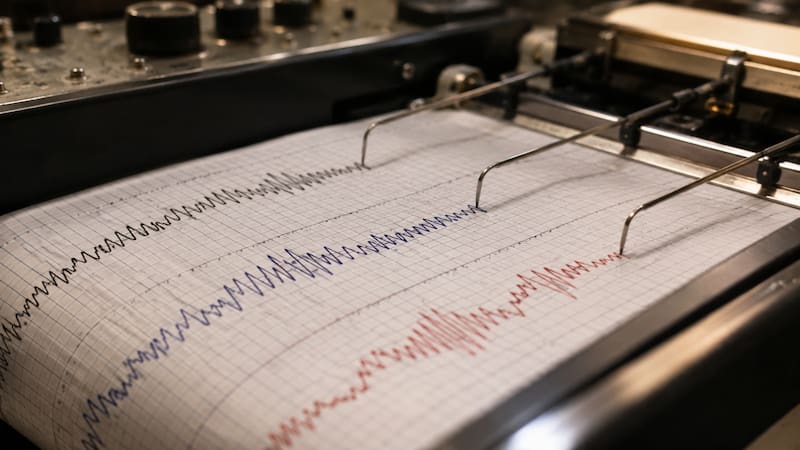
Using routine lie-detector tests as cover, the teams were to check whether defectors and agents could be trusted, relying on polygraph, drugs and hypnosis.
The first team reached Japan in July 1950, a month into the war, according to journalist John Marks’ 1979 book “The Search for the ‘Manchurian Candidate.’” Starting that October, he wrote, the team used what it called advanced techniques on 25 North Korean prisoners of war.
Marks based his account on CIA records, and the newer documents partly back it up. Notes from an Aug. 8, 1951, CIA meeting describe an Army project in Japan and Korea. In that project, a polygraph operator worked with psychiatrists and psychologists on Korean POWs.
Why did the CIA want to know if it could make someone crash a plane?
The plane question appears in an undated Bluebird document that the CIA estimates was written around January 1952. It lists problems the program believed only experiments could settle, most of them built on hypnosis.
One item asked whether a seized subject could be pushed, within an hour or two, to crash a plane or wreck a train through post-hypnotic control. Others asked whether the agency could guarantee total memory loss, reshape a personality or get someone to act against their own morals.
The research was driven by fear that communist captors were brainwashing American soldiers. In a 1983 deposition, Sidney Gottlieb, the chemist who ran MKUltra, said a review had found no evidence that American POWs in Korea were subjected to drug-induced hypnosis.