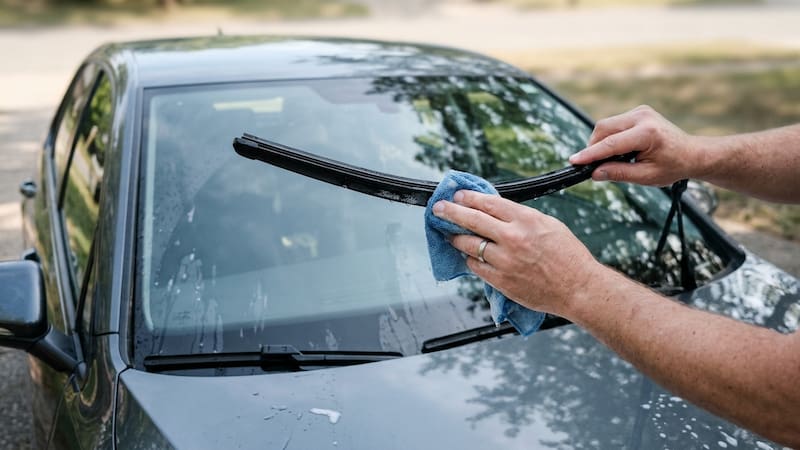

En esta noticia
When wiper blades start skipping across the glass, making that annoying noise or leaving streaks and spots they do not clean, the first reaction is usually to think they are worn out and need to be replaced.
In many cases, however, the problem is not the rubber itself, but dirt buildup along the edge, and it can be fixed with something as simple, homemade and inexpensive as wiping it down with a cloth and alcohol or vinegar.
Why They Make Noise and Scratch the Glass
The rubber edge of a wiper blade is a part with a precise edge: It rests on the glass at an exact angle and sweeps away water evenly. With use, that edge picks up a film of dust, dirt from the road, insect remains, sap, soot and pollution, along with a layer of the rubber itself that oxidizes in the sun and ozone.
That grime breaks the even contact between the rubber and the glass. Instead of gliding smoothly, the blade repeatedly sticks and slips many times a second: That jerking is what you hear as noise or squeaking, and it leaves streaks of water and lines because the edge no longer makes even contact. In other words, many times the rubber is not worn out -- it is just dirty and hardened on the surface.
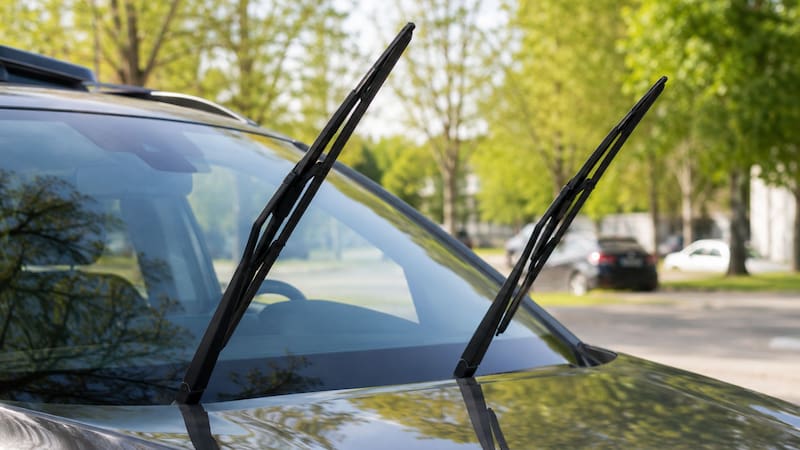
How to Clean Wiper Blades So They Stop Making Noise and Scratching the Glass
The key is to clean just the rubber edge. Isopropyl alcohol is a solvent: It dissolves grease, wax and the oily film from the road that water alone will not remove, lifts away the oxidized rubber layer and evaporates without leaving residue. Once the edge is clean and smooth, it glides again without skipping: The noise goes away and the streaks do too.
White vinegar is a gentler alternative: Its acidity (acetic acid) helps loosen dirt and mineral buildup stuck to the edge. It cleans well, though it is a good idea to dry it afterward so no moisture is left behind.

Step by Step: How to Clean Them
The process is quick and does not require tools:
- Lift the wiper arm away from the glass, taking care that it does not snap back against the windshield (the impact can chip the glass).
- Dampen a clean cloth or cotton ball with isopropyl alcohol or white vinegar.
- Run the cloth along the rubber edge, from one end to the other, pressing just lightly enough to clean the exact edge that touches the glass.
- Repeat until the cloth comes away clean: You will see how much black grime comes off.
- Do the same with the other blade and, if applicable, the rear one.
- Let it evaporate or dry carefully before lowering the arm back into place.