En esta noticia
When buying ground beef, it is common to wonder whether there is a real difference between asking for it to be ground at a butcher shop or choosing a prepackaged tray at the supermarket.
Although both options may seem similar, there are essential aspects worth knowing before choosing.

Butcher shop ground beef: what to keep in mind
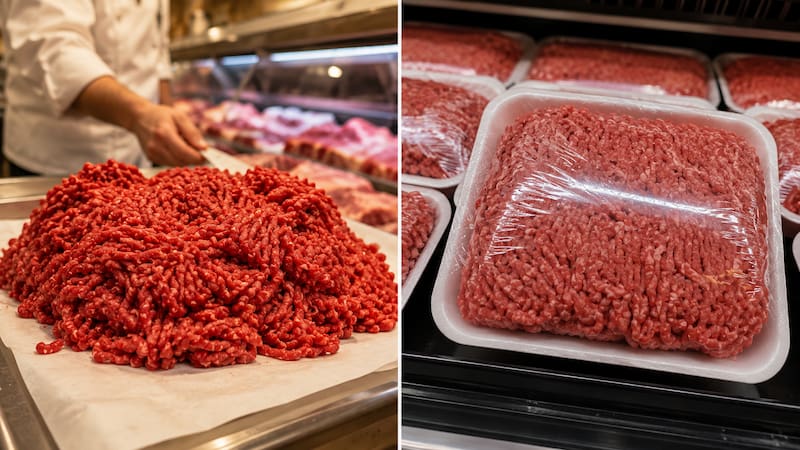
When meat is bought and asked to be ground on the spot, the consumer can choose the cut they want to use and observe the grinding process.
This alternative allows the piece to be selected before it is processed. However, the fact that the meat is ground in front of the consumer does not mean it will have less fat, as is often believed. The final composition will depend on the cut chosen and the amount of fat in the piece used.

Supermarket ground beef: what to keep in mind
According to what was reported by the Food Safety and Inspection Service (FSIS) of the United States Department of Agriculture (USDA), there is a difference between products labeled as “ground beef” and those marketed as “hamburger”.
The main difference in these cases lies in the fat: while fat may be added to the hamburger type, ground beef cannot have this addition. In both cases, up to 30% fat is allowed, but in one it can be added and in the other the cut must already contain it.
“Both ground beef and ground meat can contain seasonings, but no water, phosphates, extenders, or binders are added,” authorities say.

What is better, buying meat at the butcher shop or at the supermarket?
There is no single answer to say that one option is better than the other; both have their advantages. For this reason, more important than the location is paying attention to the nutritional information and the type of cut being used for the meat.