
En esta noticia
Door frames are often left out of everyday cleaning, but over time they can accumulate dust, grease, fingerprints, and other residue.
In particular, areas near the entrance are constantly exposed to people moving in and out and to dust coming in from outside.
To address this problem, many people turn to white vinegar, a common household product that can be diluted with water for certain cleaning tasks.

Vinegar on the door frame: the home trick for removing dirt
One of the main reasons vinegar is recommended in this area is its ability to help loosen certain residue that sticks to surfaces.
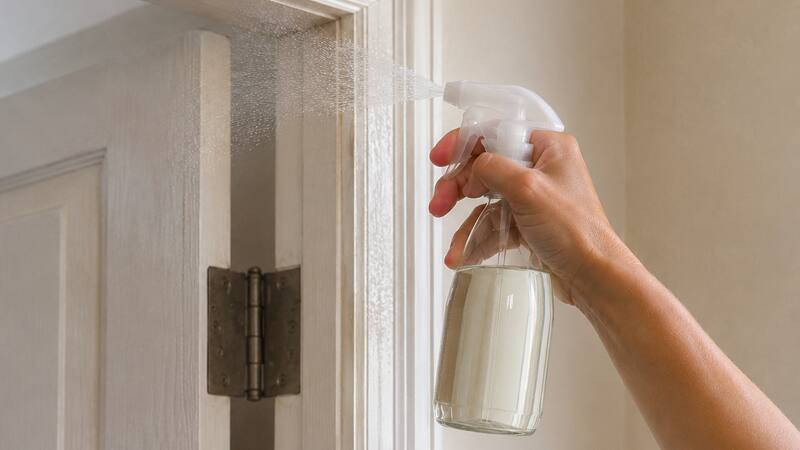
To prepare a simple solution, you can mix white vinegar and water in a container or spray bottle. Then apply a small amount to a microfiber cloth and clean the frame.
Instead of soaking the surface directly, it is preferable to spray the product onto the cloth. This way, you can better control the amount used and avoid liquid building up in joints, hinges, or sensitive areas of the door.
Why is vinegar recommended for cleaning frames?

White vinegar contains acetic acid, which can help dissolve certain deposits and residue found on household surfaces.
For this reason, it can be useful for treating stains, dirt residue, and some mineral deposits. In addition, its characteristic smell can help temporarily reduce certain unpleasant odors present on a surface.
Its use should be adapted to the frame material and to the manufacturer’s instructions when dealing with delicate surfaces.
How to clean the door frame with vinegar step by step
The process is simple and does not require too many items.
1. Remove the dust: before applying any liquid, it is best to wipe with a dry cloth to remove dust and loose particles.
2. Prepare the mixture: dilute white vinegar with water. A simple ratio can be similar parts of both products for general cleaning.
3. Apply to a cloth: instead of spraying large amounts directly onto the frame, place the solution on a microfiber cloth.
4. Gently rub: wipe the cloth over the dirty areas, paying special attention to corners and sections where marks usually remain.
5. Remove the residue: finish with another damp cloth and, if the material requires it, dry completely.
This method can be repeated whenever the frame again shows dust, marks, or surface dirt.
Can vinegar be sprayed directly on any frame?
No. This point is especially important.
Although vinegar can be used on some surfaces, it is not advisable to apply it indiscriminately. Materials sensitive to acids may deteriorate, lose their shine, or suffer changes in their finish.
For example, it is best to avoid using it on marble, granite, and other natural stones sensitive to acids, since vinegar can affect their surface.
It is also advisable to be cautious with certain wood finishes, paints, and coatings.
If in doubt, the best option is to first test the mixture on a small, hidden area.