
En esta noticia
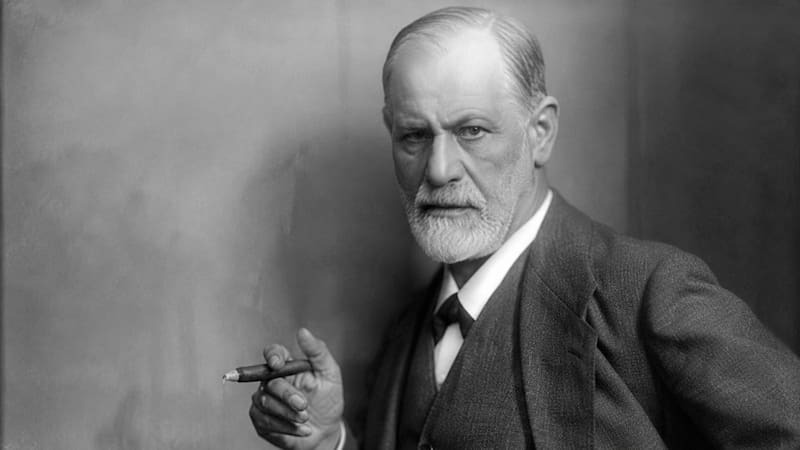
Sigmund Freud, remembered today as the father of psychoanalysis, devoted an entire work to the study of jokes and their relationship to the unconscious.
In 1905, he published Jokes and Their Relation to the Unconscious, a work in which he analyzed why certain jokes provoke laughter and what relationship they may have with thoughts, desires and emotions that normally remain repressed.
The idea behind his theory helps explain why a joke can say something that would be difficult to express directly. For Freud, the joke works like a kind of disguise, allowing ideas to be presented indirectly and, at the same time, revealing what is being kept out of consciousness.
What Freud said about jokes and the unconscious
Freud distinguished three situations related to laughter: jokes or wit, the comic, and humor
According to the interpretation presented by the Stanford Encyclopedia of Philosophy
- In a joke (der Witz), the released energy is related to the effort used to repress certain feelings
- In the comic, the energy is linked to the work needed to think
- In humor, it is related to the energy used to experience emotions
In the specific case of jokes, Freud considered that this energy used to keep certain contents repressed could become momentarily available and be expressed through laughter.
Why jokes reveal a truth, according to Freud
For the neurologist, the contents most frequently repressed are related to sexual desire and hostility. For that reason, he considered that many jokes and witty remarks revolved around these themes.
In his view, a joke can allow a person to indirectly express something that, under normal circumstances, they would have trouble expressing directly.
In this way, Freudian theory makes it possible to understand the joke as a way of making statements about people, events, or situations in general without speaking about them explicitly.
The phrase “every joke, at bottom, conceals a truth,” attributed to Freud sums up a central idea of the analysis presented in his work.