
En esta noticia
In recent weeks, the appearance of rabbits with strange growths on their heads has once again drawn attention in different regions of the United States.
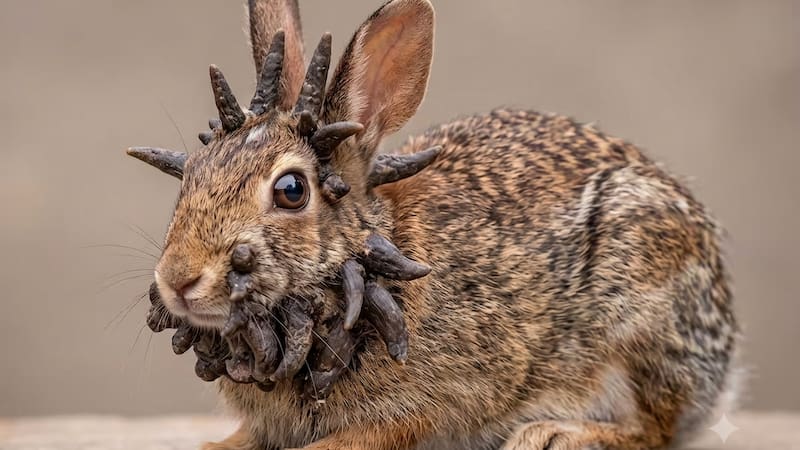
The photographs, which quickly began circulating on social media, show animals with multiple protrusions that, at first glance, look like tentacles or horns.
Although the phenomenon is striking, specialists warn that it is a known disease that continues to cause concern among residents and scientists.

Why do rabbits with “tentacles” appear on their heads?
The appearance of these animals is related to the Shope papilloma virus, a disease that causes the appearance of wart-like tumors in different parts of the body, especially the head, face, and neck.
When the lesions grow uncontrollably and harden, they can take on an elongated or branched appearance that resembles small horns or tentacles, which explains the impact generated by the photographs shared online.
Although the appearance may be alarming, experts clarify that these are not real tentacles, but rather masses of tissue caused by the viral infection.
What is Shope papilloma virus and how does it affect rabbits
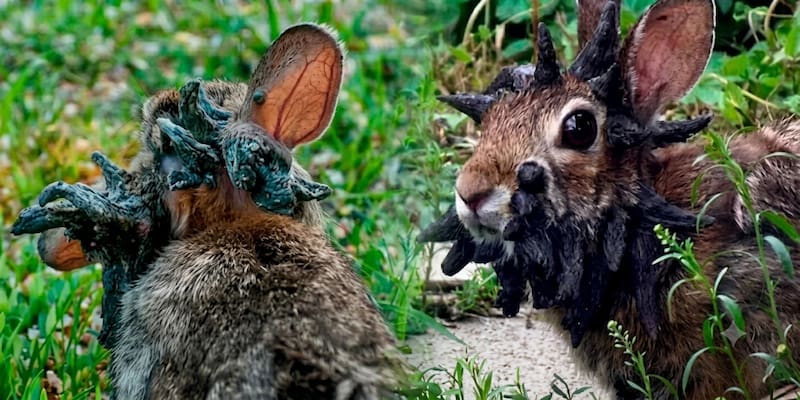
The virus was identified several decades ago and mainly affects cottontail rabbits, one of the most common wild species in North America.
The infection causes the formation of warts that, in some cases, remain small and disappear over time. However, when the animal’s immune system cannot control the virus, those lesions can grow considerably and make basic functions such as eating or seeing normally more difficult.
Specialists point out that the disease usually spreads through contact with insects that act as vectors, especially during the warmer months, when the activity of mosquitoes and other arthropods increases.

Do they pose a danger to people?
One of the main questions that arose after the images spread was whether these animals pose a risk to human beings.
According to experts, the virus is adapted to rabbits and there is no evidence that it causes the same disease in people.
However, they recommend not handling sick wild animals, avoiding direct contact, and notifying wildlife authorities if a specimen with significant lesions or unusual behavior is observed.