
En esta noticia
Drivers in the United States must check whether their state requires a vehicle inspection to renew the car registration or transfer ownership.
In places such as New York and Pennsylvania, there are periodic safety checks, while California requires emissions tests for certain vehicles and procedures. Failure to comply can prevent renewal of the license plate.

What is checked in the vehicle inspection
The checks depend on each state’s rules. Safety inspections can include the brakes, lights, tires, steering, seat belts, windshield wipers, and other components that affect the vehicle’s operation.
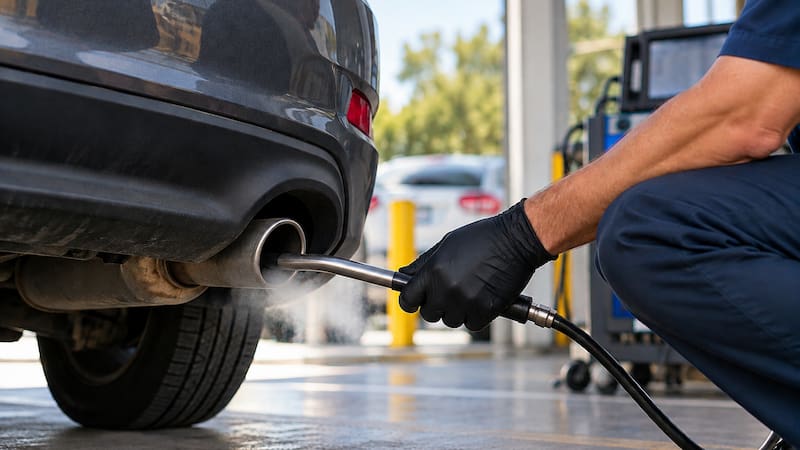
In the case of emissions tests, known as Smog Check, it is verified that the car meets the corresponding environmental standards. The United States Environmental Protection Agency (EPA) explains that vehicles that burn fuel emit pollutants that contribute to the formation of smog. It also warns that these agents include “nitrogen oxides, non-methane organic gases, carbon monoxide, particles, and formaldehyde”.
Which states require safety inspections or emissions tests
The requirements are not the same across the country. Here are some examples:
New York
Requires that vehicles registered in the state pass an inspection at least every 12 months. In cars and light trucks, the safety inspection includes brakes, seat belts, steering, suspension, tires, lights, windshield, windshield wipers, horn, mirrors, and possible fuel leaks.
Most of these vehicles must also pass an emissions test. According to the New York Department of Motor Vehicles (DMV), both inspections are carried out at the same time and vehicles that fail the emissions check may be prevented from renewing their registration.
The emissions test depends on the vehicle’s characteristics. For example, most gasoline-powered cars built since 1996 and diesel vehicles from 1997 onward, with a gross weight under 8,501 pounds, are subject to an on-board diagnostic system (OBDII) inspection.
Pennsylvania
Requires periodic safety inspections at stations authorized by the state Department of Transportation (PennDOT). These inspections are intended to verify that vehicles meet safe operating requirements. In addition, emissions tests are mandatory in certain regions, including the Pittsburgh and Philadelphia areas, as well as other zones designated by the program.
Therefore, the obligation to carry out both inspections depends on where the vehicle is registered. Inspection fees do not include the cost of any repairs needed to fix the defects found.
Drivers whose cars do not pass the inspections will not receive the windshield stickers, not to mention that they will be driving illegally once the current deadline has expired.
North Carolina
Requires an annual safety inspection to register a vehicle or renew its registration. The inspection must be carried out within the 90 days before the registration expires. In addition, vehicles registered in 19 counties must pass an emissions test that is carried out together with the safety inspection.
The published cost for the combined inspection is US$30, while the safety inspection alone costs US$13.60. If the driver does not comply with the inspection within the corresponding deadline, the vehicle registration may be blocked until the procedure is completed.
California
Requires emissions tests for certain vehicles to renew registration, transfer ownership, or complete an initial registration, as applicable. In general, gasoline, hybrid, and alternative-fuel cars from model year 1976 onward are included, as are diesel vehicles from 1998 onward, with specific exceptions.
The Bureau of Automotive Repair (BAR) states that the emissions inspection is usually required every two years to renew the registration when the vehicle is subject to that requirement. The agency also notes that gasoline, hybrid, and alternative-fuel models eight years old or less are exempt from the test for renewal, although they must pay an emissions inspection fee; and that exceptions apply to electric vehicles.
California also requires an emissions inspection in certain ownership transfers and when registering vehicles from other states for the first time.
Those who do not pass will receive a detailed report with the components or emissions that failed, and the renewal certification will also not be sent to the DMV.
What happens if the car does not pass inspection
If a car does not pass an emissions test, the owner must review the report, make the necessary repairs, and finally request a new inspection. In California, the BAR explains that the report identifies the result and the problems detected, and advises keeping a copy for personal records.
Failing can delay or prevent registration renewal if the procedure requires a valid certification. However, that does not mean that all states automatically cancel the plate for any defect: the consequences depend on local regulations and the type of inspection.