
En esta noticia
Behind many success stories in the United States is a long road of effort, sacrifice, and setbacks. Whether they come from humble beginnings or have faced obstacles along the way, those who achieve their goals share a common trait: the persistence to keep going when the path gets hard.

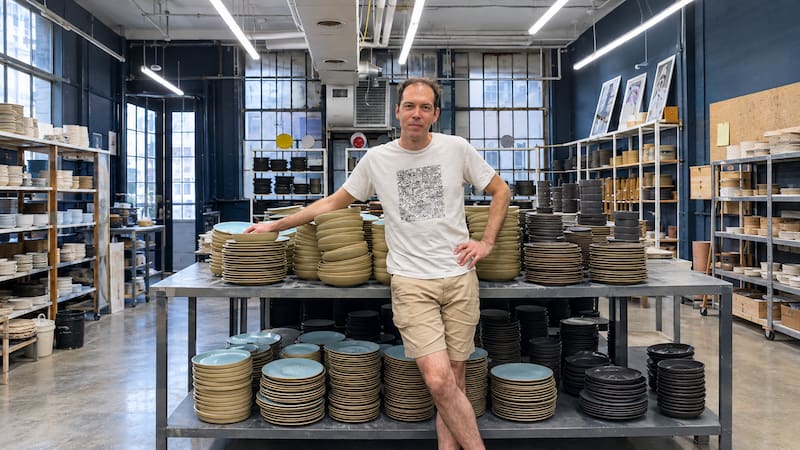
For Jono Pandolfi, it took two decades to turn his love for clay into a real business. Today, his handmade plates and bowls are used at top restaurants like Eleven Madison Park and Jean-Georges in New York.
“I think it’s safe to say that it’s pretty hard for a ceramic artist or someone who studied clay to build a business that’s bringing in over $6 million per year,” he told CNBC Make It. “I feel like I’m living the dream of a ceramic artist.”
The teacher’s side hustle ended up being a millionaire’s business
Pandolfi launched his company in 2004 as a side project and creative outlet, while he taught ceramics and worked for larger manufacturers.
“Working with my hand almost felt like a non-negotiable. Working a desk job didn’t find my personality,” he said.
In 2010, he lost his manufacturing job and decided to focus on his business full-time. That same year, Anthropologie ordered 400 of his teapots. “Anthropologie was the seed money that got this going for the second time,” he told Philadelphia magazine.
The order that changed everything for Pandolfi
The turning point came in 2012, when the NoMad Hotel opened in New York and ordered more than 6,000 pieces in a $100,000 deal. After that project, Pandolfi hired his first full-time employee and bought more equipment, and the business became profitable.
When the pandemic shut down restaurants, Pandolfi began selling directly to home cooks, and those sales now make up nearly half of the business. The company brought in almost $5.2 million in 2023, more than three times its 2020 revenue, and projected more than $6.6 million for 2024.
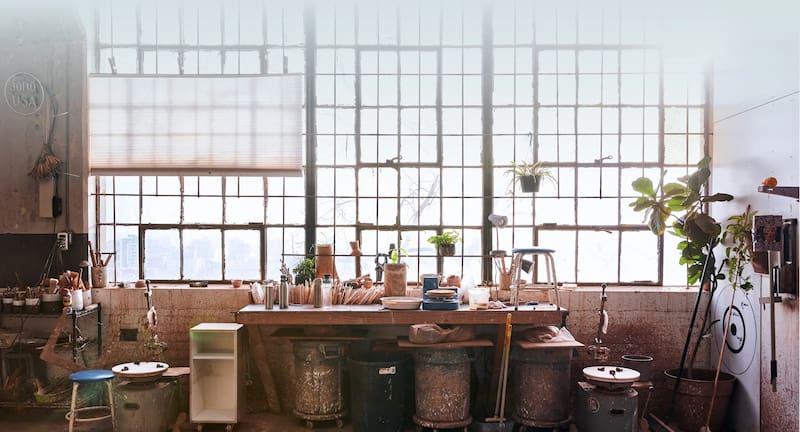
His studio, an old soap factory in Union City, New Jersey, across the Hudson River from Manhattan, now covers 30,000 square feet and has a team of about 38 people. Once a month, it opens to the public to sell pieces with small imperfections.