
En esta noticia
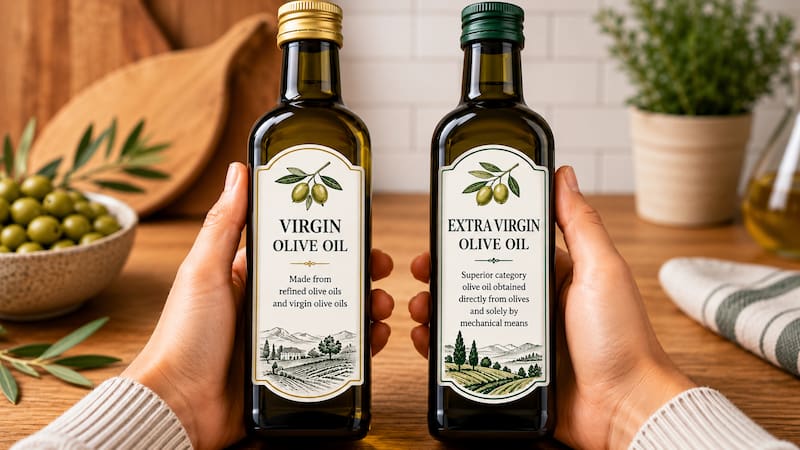
Virgin olive oil and extra virgin olive oil are obtained through the same mechanical extraction process, without refining, but they differ in their acidity level and in a tasting test that measures their sensory quality. That difference determines which of the two better preserves its nutritional properties and which one is worth choosing when buying.
Both types are classified according to international standards that evaluate chemical and organoleptic parameters. The first allows higher acidity levels and some slight flavor or aroma defects, while the second must meet stricter standards to receive that higher designation.

How is virgin olive oil different from extra virgin olive oil?
The first difference is chemical: extra virgin olive oil must have an acidity equal to or lower than 0.8 degrees, while virgin olive oil allows up to 2 degrees. That value is measured in a laboratory and is the first classification filter.
The second difference is sensory and is defined through a professional tasting panel. Extra virgin must not have any flavor or aroma defects, while virgin may have slight defects, as long as the median does not exceed 2.5 points on the official scale.
Criteria that define each category
- Extra virgin olive oil: acidity <= 0.8 degrees and zero tasting defects.
- Virgin olive oil: acidity <= 2 degrees and slight defects allowed (up to 2.5 in panel test).
Which one is worth buying and why?
Extra virgin olive oil better preserves its nutritional properties because it has no defects and its acidity is lower, which makes it the most recommended option for raw consumption, dressings, and preparations where the goal is to preserve flavor and health benefits.

The origin of this difference lies in the care of the crop, the time of harvest, and how quickly the olives are pressed. The more care these three factors receive, the higher the quality of the resulting oil will be, which explains why not all virgin oils reach the extra category.