
En esta noticia
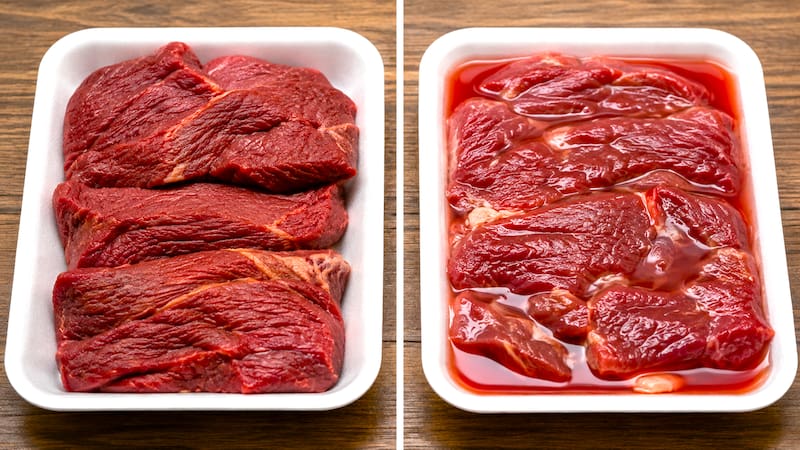
When choosing a meat cut at the supermarket, it is common to notice a difference in the trays: some have little liquid, while others are full.
Although many believe the meat has lost quality, the explanation is actually more complex. Much of that moisture is part of the cut and is related to how it is preserved, the type of piece, and the packaging.

Dry meat or meat with a lot of liquid: what is the difference
Beef and poultry contain a large amount of water, which is naturally present.
According to what was explained by the United States Department of Agriculture (USDA), muscle contains approximately 75% water, although the amount varies depending on the type of cut and meat.
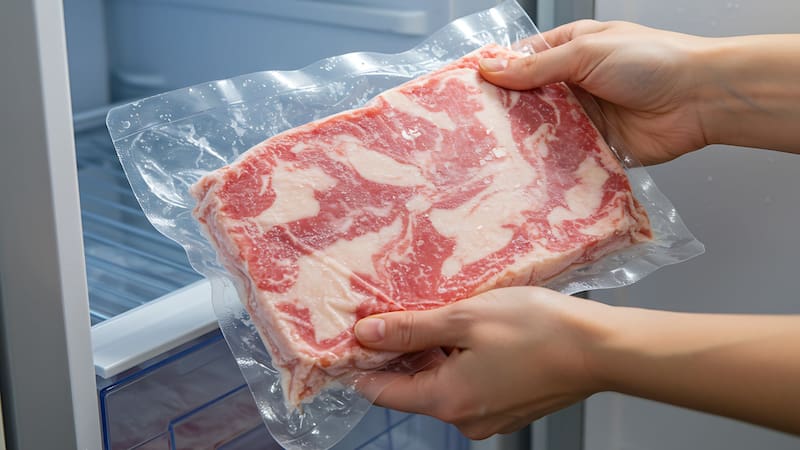
Over time, moisture can slowly leave the muscle fibers and collect inside the package. This happens during storage, transport, or refrigerated display.
So, the more liquid there is, the longer the cut has been refrigerated.
Does the type of meat packaging influence the amount of liquid?
Yes. Vacuum-packed products usually accumulate more liquid because the airtight packaging puts pressure on the meat and encourages liquids to leave the tissues.
In contrast, trays wrapped with film allow evaporation.

Dry meat or meat with a lot of liquid: which is better to buy?
Although the liquid in the tray may indicate that the meat has been stored for a longer time, there are more important factors to consider when choosing a cut such as
- Whether the label indicates if the product contains added solutions or only natural water
- Whether the packaging is in good condition
- Whether the meat has been kept refrigerated
- Compare the labels when the retained water percentage is shown to assess similar products
In that sense, there is no option considered universally better in terms of liquid; instead, it is preferable to check other factors first.