En esta noticia
Recently, Texas implemented modifications to this procedure, exempting certain individuals from carrying out previously required checks. However, there are documents that will be required in all cases as part of the mandatory registration protocols.
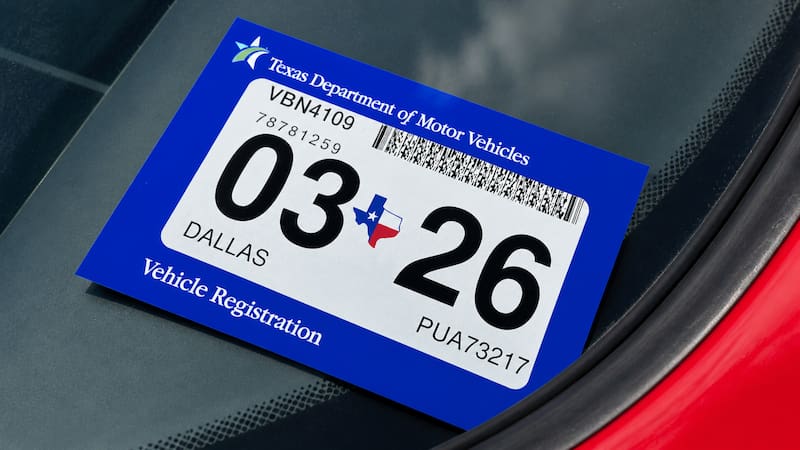
The Texas Department of Motor Vehicles (DMV) clearly states on its official website the rules that all drivers must follow to register their car in the state and thus make it eligible to circulate.
Texas will automatically deny registration to vehicles that do not comply with these requirements
To carry out this procedure, it is essential that all vehicles registered in the following counties show that their car has satisfactorily passed a certified emissions inspection .
The counties in question are the ones listed below:
- County 1
- County 2
- County 3
Texas counties: Brazoria, Collin, Dallas, Denton, El Paso, Ellis, Fort Bend, Galveston, Harris, Johnson, Kaufman, Montgomery, Parker, Rockwall, Tarrant, Travis and Williamson
In addition, to register a vehicle it is essential to provide proof of insurance coverage of up to 30,000 dollars per injured person and up to 60,000 dollars for all those injured in an incident, as well as 25,000 dollars for property damage.
Those who do not properly comply with these requirements will not be able to register their vehicle.
In general terms, the total fee for state registration will be around 51.75 dollars, although county-specific charges may be added.
Then it will be necessary to go to the local office of the county tax assessor and present an insurance card and proof of vehicle ownership.

Key change for those who must renew vehicle registration in Texas
The DMV has confirmed that the "classic" online portal for renewing vehicle registration has officially stopped working. It is important to note that not all registration services are currently available.
However, those who are eligible to renew online will still be able to complete the process digitally through Texas by Texas (TxT).
After accessing the portal, it will be necessary to create a personal profile (or log in to yours) and link your vehicle to the system.
It is essential to keep in mind that, as far as commercial or government vehicles are concerned, this process must be completed at an office.