
En esta noticia
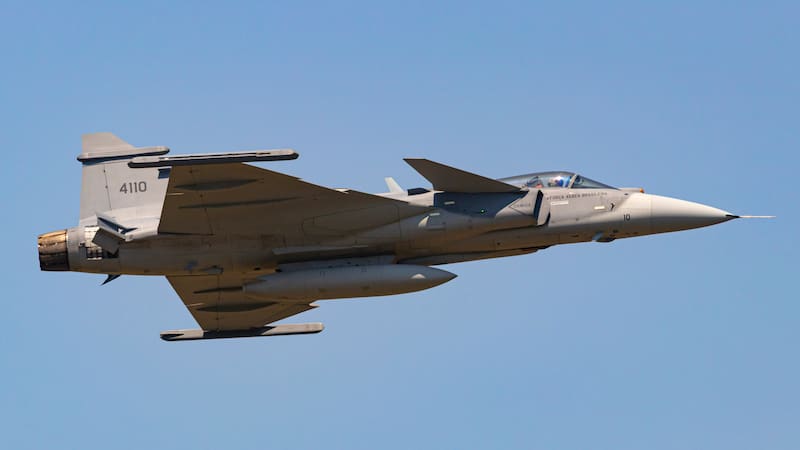
Brazil took a new step in its defense industry with the first flight of the Gripen F-39E fighter manufactured in the country by Embraer, a collaboration with the Swedish company Saab. The aircraft took off on October 6, 2026, from Embraer’s facilities in Gavião Peixoto, in the state of São Paulo.
The aircraft is part of a technological cooperation program that made it possible to develop industrial capabilities to manufacture, integrate, and test advanced combat aircraft. The Latin American country already operates other Gripens received previously, but this unit is the first produced on its own manufacturing line.
The F-39E, the designation used by the Brazilian Air Force (FAB), is supersonic and has AESA radar and an integrated electronic warfare system. However, the manufactured example still has to complete the acceptance tests before being delivered to the air force, according to the companies involved.

Brazil manufactured the first Gripen F-39E outside Sweden
The aircraft that carried out the maiden flight is the first manufactured in Brazil by Embraer and the first of 15 units scheduled to be produced locally within the current program. Likewise, the Gavião Peixoto plant houses the only Gripen production line outside Sweden, according to Embraer and Saab.
The project is based on an industrial cooperation and technology transfer agreement between Brazil and Sweden, where for more than a decade, Brazilian engineers, technicians, and specialists worked alongside Saab teams in engineering, manufacturing, integration, and flight test activities.

What is the Gripen F-39E supersonic fighter like?
The Gripen E is a single-seat combat aircraft designed to carry out air defense, reconnaissance, and attack missions. According to Saab, it integrates sensors, electronic systems and tools that allow information to be shared with other aircraft and units.
Its main technical features include:
- Supersonic speed: it is designed to fly at a speed greater than the speed of sound.
- AESA radar: it uses an active electronic scanning system that makes it possible to detect and track targets. Its technology electronically directs the radar beam and can track multiple targets.
- Electronic warfare system: it analyzes electromagnetic signals and makes it possible to apply countermeasures to make it difficult to detect, track, or operate certain adversary systems.
- Integrated sensors: it combines information from different equipment to help the pilot identify threats and understand the operational environment.
- Multimission capability: it can be used for air defense, reconnaissance, and attack tasks, depending on the configuration and the mission.
The AESA radar and the electronic warfare system fulfill different functions since, while the radar helps detect and track targets, electronic warfare makes it possible to analyze signals, warn of threats, and use defensive and offensive measures against certain enemy systems.

Will the Gripen manufactured in Brazil enter service?
The maiden flight does not mean that this unit is operational. According to Embraer and Saab, the aircraft must complete the production acceptance flight campaign and obtain airworthiness certification before being ready for delivery.
Once that stage is completed, it is expected to be transferred to the Anápolis Air Base, in the state of Goiás, where it will join the First Air Defense Group (1st GDA).
In this context, the companies did not report a specific official date for the delivery of the unit manufactured in Brazil, which is why, although the model is already part of the operations of the Brazilian Air Force, this particular aircraft still must complete the process before entering service.